

Peak Energy Gum
Plenty of angles to test, a small daily budget, and a category almost nobody searches for.
0.6x to 1.2x
Blended ROAS
+372%
Revenue
~50%
CPA Reduction
Ad Platforms Used:



About The Brand
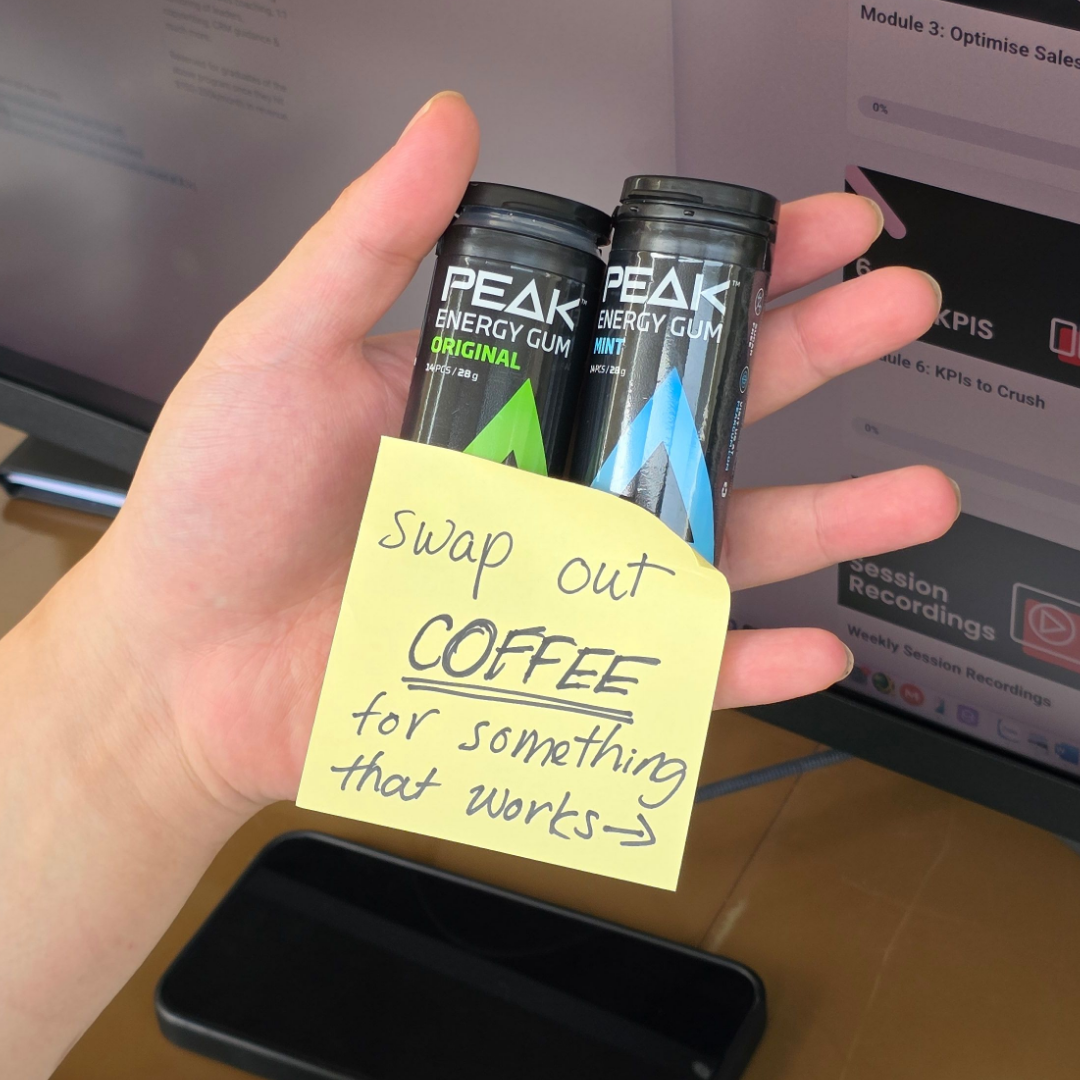
Peak sells caffeine gum on Shopify. It's for people who want the focus of an energy drink without the can or the sugar, and it sells to a crowd that already thinks about what goes into their body.
Peak's team booked a strategy session with us in July 2025, when the gum was already on shelves across Australia and New Zealand but not enough people knew it existed.
The brief was awareness, but we wanted online orders paying their way too, because break-even first orders are what make scaling possible later. So the first three months were set aside for a wide creative test.
The Challenge
Testing wide on a small daily budget has a catch. With about a dozen ads sharing the money, Meta could back an ad one day and move the spend somewhere else the next, so a promising ad never got a fair run.
The category was the other constraint. Only about 1,600 people a month search for caffeine gum, and order values were low enough that every click had to earn its keep.

Video & Static Ad Creatives
Meta Ads
- We cast a wide net first.
- With so few purchases coming through, two extra orders can flip the numbers on any single ad. So every angle got enough spend to show us something real before we started switching off what wasn't pulling its weight.
- When the first winning ad showed up, we gave it its own campaign so it stopped fighting a dozen other ads for the same small budget.
- In November we started testing Cost Cap bidding, and it quickly became the best-performing campaign in the account. A cap doesn't make the auction any cheaper. It stops Meta buying orders that cost more than a low-priced product can carry.
- Budget went up in steps: raise it, let return settle, tighten the account, then raise it again. When spend more than doubled in a month, return slipped just 9%.
Creative
- Amazon reviews + post-purchase intent mining gave us the unlimited ideas for ad angles.
- Almost all the content we had was about sport, but buyers on Amazon kept saying the gum helped them get through work. So we added a work and study angle alongside the sport content, because the people already buying were telling us what to say. This performed amazingly well
- Cutting several creators into one compilation ad became our biggest win, and not just for Peak. Single-creator videos were falling behind across other accounts too, which is usually the sign a format deserves a system built around it.
- Once an ad was winning, it got three to five new hooks, so it stayed fresh without losing what already worked.
Google Ads
- Manual bidding, on purpose - there wasn't enough data for automated bidding
- Left to automation on a small daily budget, Google can spend the whole day's money by nine in the morning. So bids started low and rose slowly, which kept spend spread across the day and kept the price of a click under our control.
- In January we pulled Search back by about three quarters and shifted Google's budget toward Shopping. Only about 1,600 people a month search for caffeine gum, and those clicks weren't turning into orders, while Shopping puts the product and price in front of someone already looking.
In Their Words
“We love working with you. I can see it's working already.”
- Nik Ghelani, Peak Energy Gum
The Results
Blended ROAS doubled in three months, revenue grew 372% off that base, and CPA came down by roughly half from its Q4 highs.
Just to clarify the shape of that: 372% off a trough is a recovery, not a scale story, and there was a pause in the engagement in the middle of it. Regional expansion was mixed. The UK and NZ didn't hold the way the home market did.
Getting to 200%+ growth in ROAS is the unglamorous half of the job. It's also the half that decides whether there's a business to scale later.
.webp)

Powered by © Pigeon Digital 2026. All rights reserved.
We acknowledge the Traditional Owners of the land on which we work, the Wurundjeri Woi Wurrung Cultural Heritage Aboriginal Corporation people of the Kulin Nation, and pay our respects to Elders past and present. We recognise their continuing connection to Country, culture and community.
.svg)