

Tapt
Great click-through rates, poor conversion. The problem was after the click, not before it.
+205%
Total Sales
22.1%+
Blended ROAS
2x
Revenue Growth vs Spend Growth
Ad Platforms Used:



About The Brand
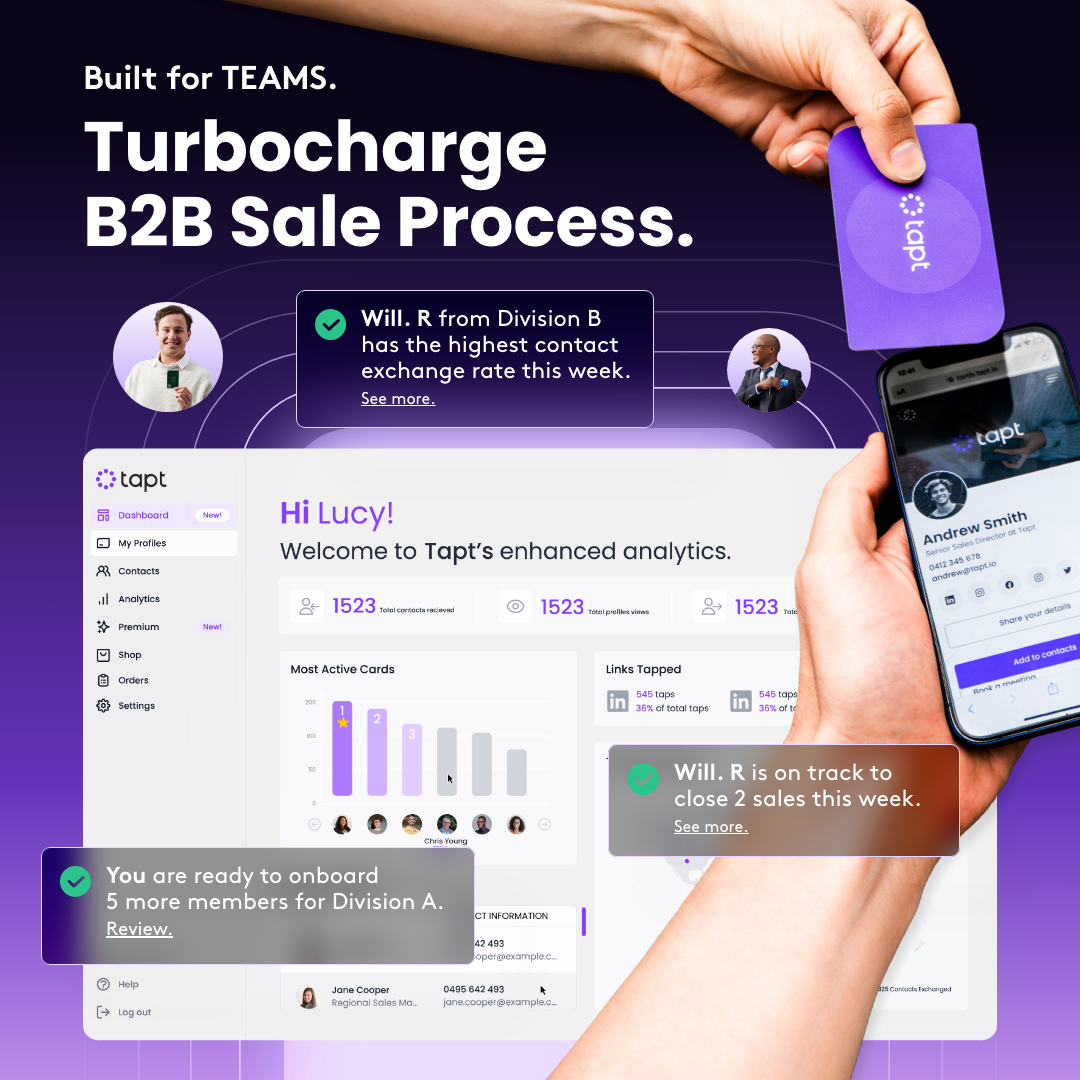
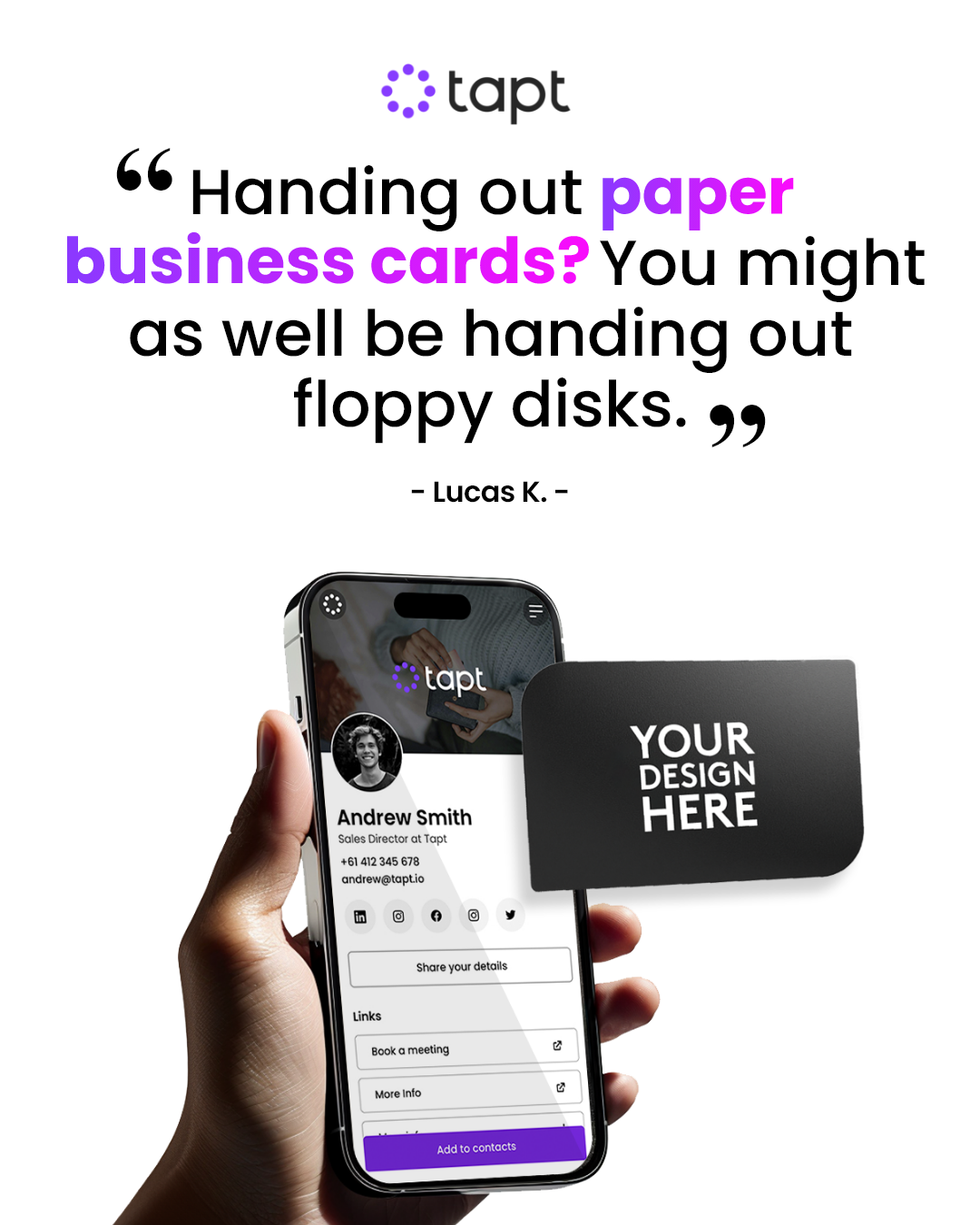
Tapt makes smart business cards. Tap the card against a phone and your contact details open, so nobody types an email address wrong at a conference. They sell to individuals and to companies kitting out a whole sales team, which are two very different purchases wearing the same product.
Tapt brought us on in September 2023 to take over their paid ads on Meta and Google.
The account was still in an exploratory phase, and acquisition costs didn't line up with what an order was worth.
The Challenge
The biggest challenge for the client to navigate was ATTRIBUTION. Meta traffic looked great on the surface but it was claiming sales from SEO/Paid Search.
B2B and B2C campaigns were also running in isolation while chasing overlapping audiences, the home market was flattening, and a company buying cards for a whole team takes far longer to decide than one person buying one.

Video & Static Ad Creatives
Meta Ads
- Change 7day click 1 day view attribution to 7-day only to only send Meta algorithm sales that were generated from ads. This is to optimise top-of-funnel customer acquisition instead of squeezing bottom funnel dry.
- We switched Advantage+ off. It had been our best performer, with no targeting at all. The catch was that it couldn't exclude existing customers, so part of every day's budget went to people who'd already bought. A campaign retargeting past buyers can look like your best performer while it's often taking credit for sales you'd have made anyway.
- Remarketing was rebuilt around tight exclusions, and more customer data was passed back so past buyers actually matched and dropped out.
- For EOFY, we proposed to run ads without a discount, and returned 12%+ ROAS YoY. People who click because they want the product make better buyers than people who click for a deal, and a business with budget to spend before the year closes doesn't need a price cut to act.
- Each market got its own year-end timing, eg. the UK's financial year closes about three months before Australia's.
Creative
- One angle at a time.
- Problem-solution UGC got its own testing campaign with several edits of the same story, so it was always clear which version was selling. The weaker cuts came off within a month, and the angle became one of the account's creative pillars.
- Motion graphics on their own came off in late 2023 after spending without a single sale. Big tech brands can run pure animation because their sales come from somewhere else, so we kept the animation and used it as b-roll inside scripted videos.
- In 2025 we turned the previous year's founder stories back on alongside newer UGC, because a proven ad doesn't expire on a calendar.
Google Ads
- Search ran in two tiers.
- Someone searching the category is still comparing options, while someone searching for a specific feature already knows roughly what they want. Separate campaigns let each tier carry its own bid and budget instead of one price for two very different levels of intent.
- Bids started manual and cheap, then moved to target CPA once conversions built up. Ahead of the end of financial year, we took the target off again to open up broader keywords for the busiest buying season.
- Budget moved toward Search in August 2024, where we'd said on the first call Tapt's money belonged.
- Shopping and Performance Max expanded into the UK, US and Europe once Elon was ready to back the spend.
In Their Words
“Love your work, man. Creative is amazing. I'm quite happy with the UK performance.”
- Elon Datt, Founder & CEO, Tapt
The Results
Between December 2024 and June 2025 total sales grew 205% while spend grew at roughly half that rate, so revenue grew about twice as fast as the money behind it. Blended ROAS went from 11.49x to 16.75x over the same window.
Just to clarify, that window isn't uninterrupted. Several months inside it were down year on year even while month on month kept climbing, and the international launches took a while to settle before they contributed anything.
The thing that actually changed was fixing what happened after the click, then letting the international markets absorb the growth the home market couldn't give us any more.
.webp)

Powered by © Pigeon Digital 2026. All rights reserved.
We acknowledge the Traditional Owners of the land on which we work, the Wurundjeri Woi Wurrung Cultural Heritage Aboriginal Corporation people of the Kulin Nation, and pay our respects to Elders past and present. We recognise their continuing connection to Country, culture and community.
.svg)