Lead With the Dream, Not the Pain: Rethinking Your Ad's First 3 Seconds

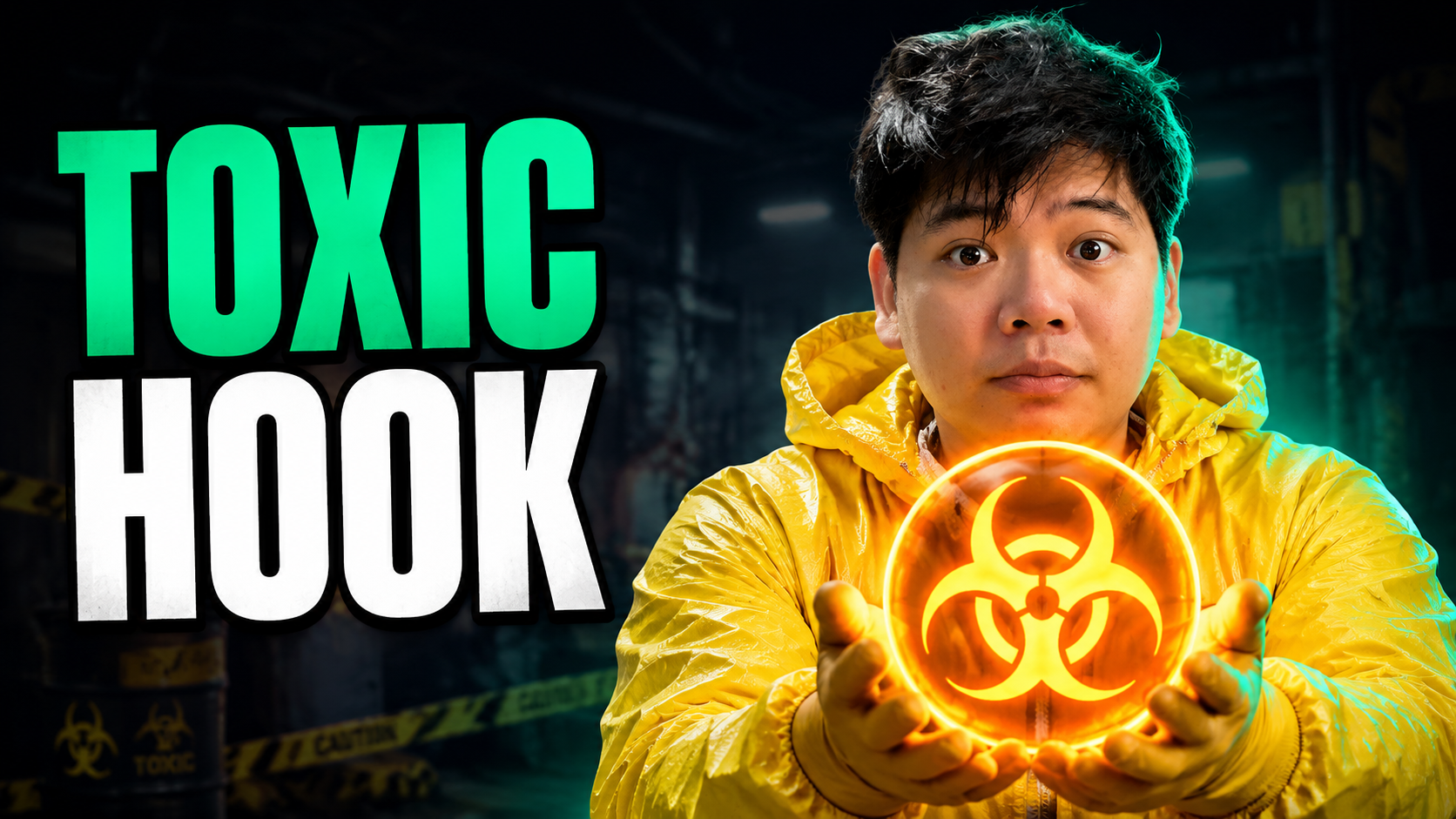
When your ad opens, are you handing someone their problem or their future? Because in the first three seconds, that's the only real choice you're making, and most brands pick the problem on instinct.
You know the move. "Struggling with X?" "Tired of Y?" Open on the pain, agitate it, then ride that discomfort into the solution. It's the most repeated advice in direct response, and for a long time I repeated it too.
I've changed my mind on it. Not entirely, there's a place for the pain hook and I'll get to it, but the reflex to always open on the wound is costing a lot of brands more than they realise. Here's my take on why, and what I'd do instead.
Why the pain hook is the default
The logic is sound on paper. People act to escape pain faster than they act to chase pleasure, so naming the pain grabs attention and creates urgency. Agitate hard enough and the prospect feels the itch, then you offer the scratch.
For high-intent, problem-aware audiences, this genuinely works. Someone actively searching for relief is happy to have their problem named back to them. You're meeting them where they already are.
The trouble is paid social isn't search. On Meta you're interrupting people who weren't looking for you, weren't thinking about the problem, and were halfway through a video of someone's dog. That's a completely different psychological starting point, and the pain hook can quietly turn toxic there.
The category where the pain hook poisoned the audience
Let me give you a real shape of this, with the brand and numbers kept generic.
Picture a hair care line whose hero product helps with hair loss. The obvious hook, the one a lot of creators will hand you, is to show the problem. A hairbrush full of loose strands. A close-up of a thinning patch. Name the fear, then sell the fix.
Here's the thing that does. For most of the feed, the viewer isn't sitting at home agonising over their hairline at that exact moment. So when your ad shoves a brush full of hair in their face, you're not meeting a felt need. You're forcing a mirror onto someone who didn't ask for one. The emotion you've created is "not now", maybe even "not ever from this brand".
And that reaction doesn't just cost you that one impression. It gets mapped to your page. The next time your brand surfaces, that person already associates you with a flinch. You've spent money to make a future touch point harder, not easier. That's the bit that stings, you're paying to poison the well you'll need to draw from later.
When that same brand instead opens on the dream, the outcome, somebody running their hands through thick healthy hair, looking like the version of themselves they want to be, the whole dynamic flips. Now the first impression is a pull, not a recoil. The people who do quietly care about their hair lean in. The people who don't simply scroll past without forming a negative mark against you. Nobody gets repelled.
The mechanism: you're buying touch points, not single views
The reason dream-first tends to win on cold traffic comes down to how people actually meet a brand on Meta. It's almost never one ad and a purchase. It's a handful of exposures over days or weeks before anyone buys.
So the real job of your first creative isn't to close. It's to earn the right to be seen again. Every impression either opens the door wider for the next one or starts nailing it shut.
A dream-led opener builds a positive association, which extends how many future touch points that person is willing to give you. A pain-led opener that lands at the wrong moment burns the association and shortens that runway. Same product, same offer, wildly different lifetime value from that audience, decided in three seconds.
That's why I think about hooks less as "what grabs attention" and more as "what kind of memory am I leaving". Attention you stole with a flinch is borrowed. Attention you earned with a desirable outcome compounds.
When the pain hook is still right
I said I haven't abandoned the pain hook, and I mean it. Opening on the problem is the right call when two things are true.
The audience is already problem-aware and actively bothered. If someone is plainly in the market, deep in research mode, hunting for relief, naming the pain is honest and efficient. You're not ambushing them, you're confirming you get it.
And the pain is socially safe to surface. Some problems people are fine seeing named in public. Others, anything tied to appearance, shame, the body, money fears, are loaded, and a blunt pain hook on cold traffic reads as an attack rather than empathy. The more sensitive the category, the more I lean dream-first up top and save the problem talk for later in the funnel, once they've chosen to keep watching.
So it's not "pain bad, dream good". It's a judgement about awareness and sensitivity. My honest default for cold prospecting, though, especially in anything appearance-related, is to open on the outcome.
How we actually test this
None of the above is worth much as a theory you nod along to. It's worth something as a test you run, because your audience will settle the argument faster than I can.
So here's roughly how I'd set it up. Take one product and write the same core ad two ways. One opens on the pain, names the problem, agitates, then resolves. The other opens on the dream, leads with the outcome and the identity, and only touches the problem gently, if at all, further in. Everything downstream stays the same so the opening is the only real variable.
Then I'd watch two things beyond the obvious cost per purchase. First, hold rate in those opening seconds, are people staying or bailing the moment the hook lands. Second, and this is the one people forget, what the cold audience does over the following couple of weeks, because the damage or the benefit of a first impression shows up in whether they come back, not just in that day's checkout.
Run it on enough spend to mean something, not fifty dollars and a hunch. More often than not, in the sensitive categories, the dream-led opener wins on the metrics that actually compound, even when the pain version looks punchier on day one.
Where to from here
If your cold ads all open by poking the wound, I'd genuinely encourage you to go pull up your three best-known creatives and read just the first line and first frame of each. Ask yourself honestly: is this handing someone their dream, or their problem? And is this a problem they'd be glad to see named in public, or one they'd flinch from on a Tuesday afternoon?
You don't need me for that part. Write the dream-led twin of your current top ad this week, put a bit of real budget behind both, and let your own audience tell you which version they'd rather meet first. I'd love to hear which one wins, because the answer surprises people more often than it doesn't.


Recent Insights®



.webp)

Powered by © Pigeon Digital 2026. All rights reserved.
We acknowledge the Traditional Owners of the land on which we work, the Wurundjeri Woi Wurrung Cultural Heritage Aboriginal Corporation people of the Kulin Nation, and pay our respects to Elders past and present. We recognise their continuing connection to Country, culture and community.
.svg)