The Hidden Risk in AI-Generated Ads: Made-Up Stats, Fake Reviews, and Compliance Landmines

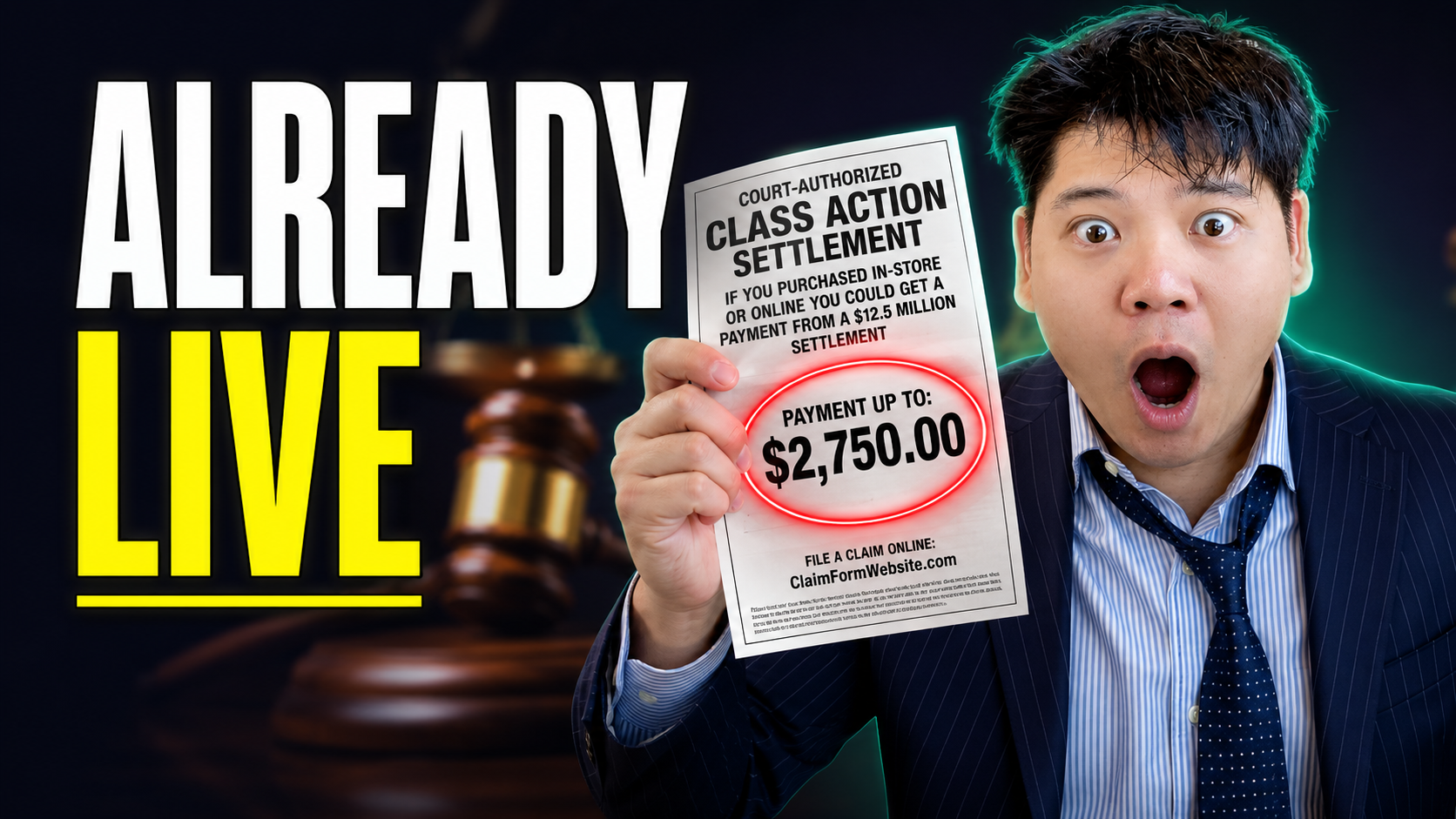
The risk with AI ad creative isn't the stuff that looks obviously fake. It's the stuff that looks great.
The clumsy AI ad, the one with six-fingered hands and melted text, gets caught instantly. Someone on the team winces, it never goes live, no harm done. The dangerous one is the clean, convincing static that a tool produced in nine seconds, where everything looks right and one of the lines on it is a number the model invented out of thin air. That one sails through. Straight into the account, straight onto a cold audience, with a fabricated claim printed on it that you never wrote and never checked.
I've watched these tools get genuinely good this past year. You can brief a model on a brand, hand it a product photo, and get back a stack of forty statics that are, design-wise, ready to run. That speed is real and I'm not here to talk anyone out of it. But the same generosity that makes the copy sound finished is exactly what makes it dangerous. The model will happily fill any gap you leave with something that reads true and isn't. So let me walk through the four places I see it happen, because every one of them is a compliance problem wearing a creative costume.
1. The stat it just made up
This is the most common one, and the easiest to miss.
You ask a tool to generate an "us versus them" comparison ad, or a headline static, and it writes the copy for you. Somewhere on that image is a hard number. "73% more protein." "Lasts 3x longer." "Used by 7,600 people." Clean, specific, confident. And entirely invented. The model wasn't lying on purpose, it has no concept of purpose. It pattern-matched what a persuasive ad usually says and produced a number shaped like a fact.
I watched a well-known demo of exactly this. Someone generated a comparison ad, looked at the figure the AI had stamped on it, and said out loud, more or less, "I wonder if that number's correct, I think it might have made it up." Then kept moving. That's the whole problem in one sentence. The number looked plausible enough that even the person who made it wasn't sure, and plausible-enough is precisely the threshold at which a false claim gets dangerous.
Here's why it's not just sloppy. A specific performance claim on an ad is a representation. If you can't substantiate "73% more protein" with an actual test, you've put an unsupported claim in front of buyers, and that's the kind of thing that gets an account flagged, gets a complaint, and in the categories that care, gets a regulator's attention. Meta's review systems are also getting better at reading text inside images. The made-up stat isn't hiding in a place nobody looks anymore.
My rule is blunt: a model is never allowed to originate a number. Not a percentage, not a multiplier, not a customer count. Every figure on a piece of creative has to trace back to something real before it goes live, or it comes off the ad.
2. The review that never happened
The second one is subtler and, I think, more serious, because it dresses a fabrication up as someone else's voice.
The clever workflow doing the rounds is to point an AI at your real customer reviews, ask it to pull the most emotive lines, and drop those into a static as a testimonial. Used carefully, that's fine, you're surfacing things real people actually said. But watch how quickly it slides. In one walkthrough I saw, the operator asked the tool for testimonials "around confidence and validation", got a set of lines, decided one was "a bit meh", and swapped in a punchier one the model had generated. The headline on the finished ad was now a quote that, as far as anyone could tell, no customer had ever written.
That's not a testimonial anymore. It's quote marks around a sentence a machine made up to sell better.
The legal line here is bright and people wander across it without noticing. A testimonial has to come from a real person and reflect a genuine experience. A quoted review that no customer gave is a fabricated endorsement, and across most markets that's not a grey area, it's straightforwardly deceptive. Same goes for star ratings, "rated 4.9 by 12,000 customers", and "as recommended by" lines. If the AI generated the social proof rather than reporting it, you're presenting invented evidence as real, with quotation marks doing the lying for you.
The tell to watch for: the moment a real review gets "improved" by the model, it stops being a review. Pull emotive language from real ones all you like. The instant you let the tool write the quote, it's copy, not proof, and it can't wear quotation marks.
3. The expert who doesn't exist
This one scales beautifully and that's what makes it frightening.
AI image tools will now generate you a convincing person in a white coat, a "dermatologist", a "gynaecologist", a confident-looking founder, on demand. They'll generate magazine logos, "as seen in" strips, award badges. They'll produce a smiling spokesperson holding your product who has never existed and never used it. All photoreal, all in seconds, all good enough to run.
I've seen product pages and ads leaning on a named expert, "developed by Dr So-and-so", with no link, no real social presence, no evidence the person is real. When the doctor only appears in a single AI-generated image and nowhere a human could verify them, you have to assume there's no doctor. And if there's no doctor, every claim hung off that authority is a fabricated credential.
Be very clear-eyed about the exposure here. Putting fake "as seen in Forbes" logos, fake clinical endorsements, or a fake medical professional on your marketing isn't an aggressive growth tactic. In the categories where it's tempting, health, supplements, skincare, it's the kind of misrepresentation that draws serious legal consequences, and it compounds per order, because every sale made off a fabricated credential is its own instance. You are not borrowing authority. You are manufacturing it, and manufactured authority is the thing consumer-protection law exists to punish.
If a real expert formulated your product, brilliant, put the actual person front and centre, link them, let them be verifiable. If they didn't, the answer is not to have a model paint you one.
4. The result you can't back up
The fourth is the visual cousin of the made-up stat: the demonstration that overstates what the product does.
It's trivial now to generate a flawless before-and-after, a perfect "results in 3 days" sequence, a too-good demo. The image is clean, the transformation is dramatic, and nothing in it happened. Pair that with a copy line the model also wrote, "93% saw results in two weeks", and you've stacked an invented outcome on top of an invented statistic on top of an invented proof image. Three fabrications, one tidy static, produced faster than it takes to read this paragraph.
A demonstrated result is a claim like any other. If the before-and-after implies an outcome you can't reproduce and substantiate, it's misleading regardless of how the picture was made. "The AI generated it" is not a defence anyone has ever wanted to test.
The thread running through all four
Notice the common thread. None of these started as a lie someone decided to tell. They started as a gap, a missing number, a slightly weak quote, an absent expert, an unremarkable result, and the model filled the gap because filling gaps convincingly is the one thing it's built to do. The danger isn't that AI produces rubbish. It's that AI produces something finished-looking with a fabrication tucked neatly inside, and the speed means it's live before anyone thought to ask "wait, is that true?".
So the question worth sitting with isn't whether to use these tools. They're too good and too fast to ignore, and I'd back them for production all day. The question is the one nobody building forty statics a week seems to be asking: before that creative goes live, who on your side is checking that every number, every quote, every face, and every result on it is actually real?


Recent Insights®

.webp)

Powered by © Pigeon Digital 2026. All rights reserved.
We acknowledge the Traditional Owners of the land on which we work, the Wurundjeri Woi Wurrung Cultural Heritage Aboriginal Corporation people of the Kulin Nation, and pay our respects to Elders past and present. We recognise their continuing connection to Country, culture and community.
.svg)