Your 5.7 ROAS on Branded Search Is Really a 1.3: The Incrementality Math Most Agencies Won't Show You

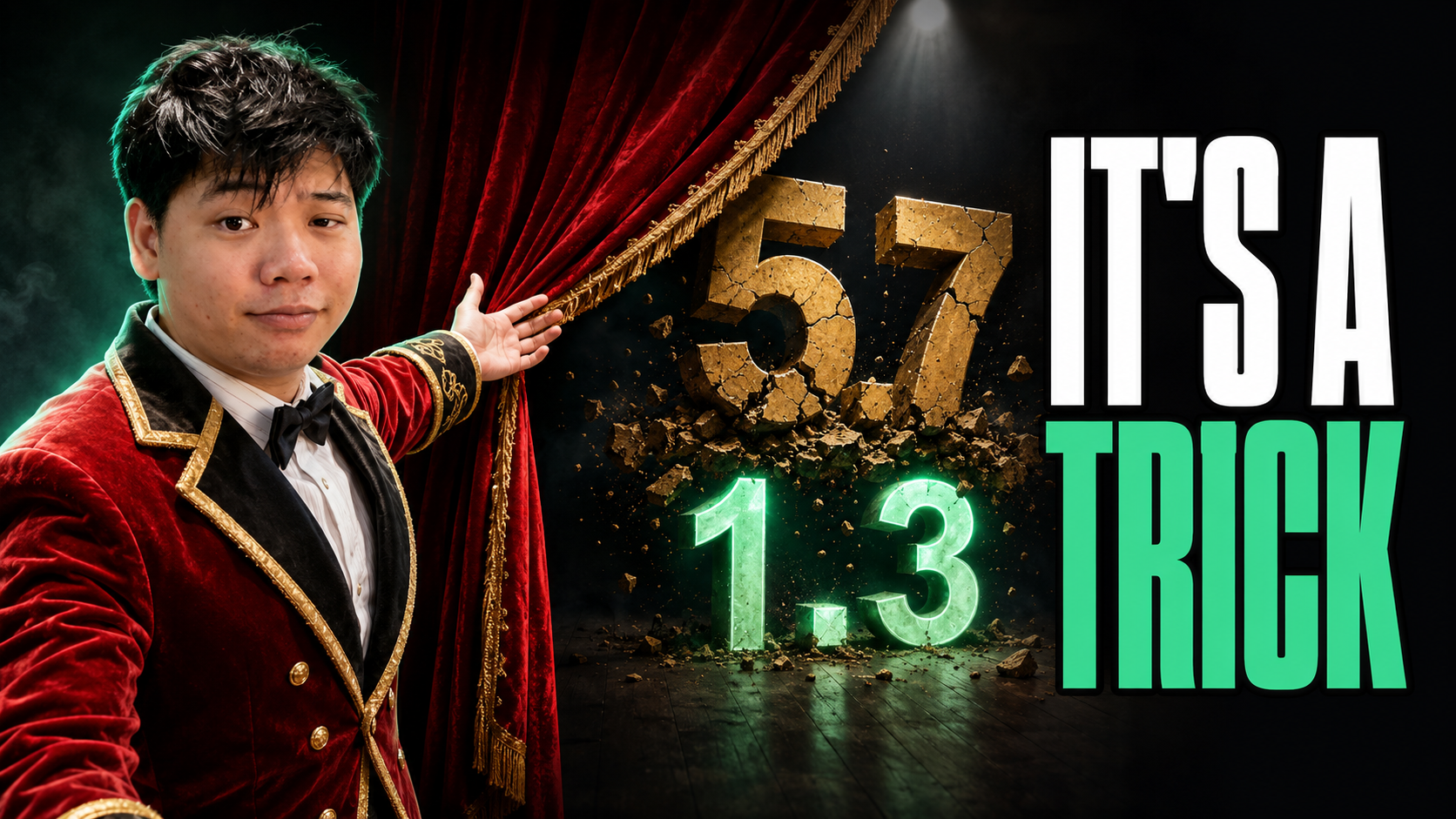
"Branded search is our best channel - it's doing a 5.7." A founder said that to me on a call a few months back, and he said it the way you'd announce a winning lottery ticket. Proud. Settled. Case closed.
I didn't have the heart to tell him in that moment that his best channel might be his most expensive way of paying for sales he was already going to make. But that's exactly what was going on, and it's going on in a lot of accounts right now, hiding behind a number that looks too good to question.
So let me take that 5.7 apart. Because once you see what's underneath a branded-search ROAS, you can't unsee it, and you'll never read that line in a report the same way again.
What a branded-search campaign is actually buying
Start with what branded search is. Someone types your brand name into Google. They already know you. They've already decided, or they're most of the way there. They were heading to your site regardless.
The branded ad sits at the top of that search and takes the click. Then the platform records the sale against the ad, and your report shows a gorgeous ROAS, because the cost of bidding on your own name is tiny and the people clicking were the warmest buyers you have.
Here's the uncomfortable question that ROAS can't answer: if that ad hadn't been there, would the sale have happened anyway? For a big chunk of branded clicks, the honest answer is yes. They'd have scrolled past the ad to the organic result two centimetres below it, the one you don't pay for, and bought exactly the same thing.
So the platform is taking credit for revenue that was already yours. The 5.7 isn't a lie, exactly. It's just answering the wrong question. It's telling you how much revenue touched the ad, not how much revenue the ad created.
The word for the gap is incrementality
The real question, the only one worth asking of any channel, is incremental: how much more did you sell because this campaign existed, versus what you'd have sold without it?
That's a different number from the one on the dashboard, and the gap between them varies enormously by channel. Some channels under-report their true impact. Others wildly over-report it. Branded search is the king of over-reporting, because so much of what it "drives" was already coming.
There's a way to put a figure on this, and once you have it the whole picture reorganises. You take a channel's reported ROAS and multiply it by its incrementality factor - the share of that reported performance that's genuinely additive rather than borrowed.
From the aggregate of geo-holdout tests across a spread of DTC brands, the rough starting points look like this. Meta retention sits around a 60% factor. Google non-brand and YouTube land near 75%. Meta acquisition often reads above 100%, meaning the platform under-credits it. And Google brand? Around 30%.
These are starting points, not gospel. Your brand's real numbers need validating with your own test, and they move brand to brand. But 30% for branded search is a sane place to begin, and it's the figure that detonates that founder's 5.7.
The autopsy, line by line
Let me do the maths on his channel the way I did it on the call, with round illustrative numbers so you can follow the shape.
Reported branded-search ROAS: 5.7.
Incrementality factor for Google brand: roughly 30%.
True incremental ROAS: 5.7 multiplied by 0.3, which is about 1.7.
So the channel he was proudest of was actually returning somewhere near a 1.7 on a truly incremental basis. Now hold that against his break-even. His blended break-even sat around a 1.8. A truly incremental 1.7 is below his break-even. The "best channel in the account" was, in real terms, slightly underwater - paying to take credit for demand that already existed.
You can run the same logic the other direction to find your real target, and I think this is the more useful way to hold it. Say your account-wide goal is a 2.5 MER. For branded search to genuinely pull its weight at a 30% incrementality factor, its reported ROAS would need to be 2.5 divided by 0.3, which is about an 8.3. Anything under that and the channel is reporting better than it's actually performing against your goal.
His 5.7 wasn't beating an 8.3 bar. It was a long way short of it. The number that felt like a win was, measured properly, a quiet loss.
Why your agency loves this number (and won't volunteer the truth)
Here's the part that makes this awkward, and I'm going to say it plainly because most won't.
A lot of agencies are paid on blended ROAS or a percentage of spend. Both of those incentives fall in love with branded search. A campaign that reports a 5.7 drags the blended account average up and makes the whole engagement look healthier than it is. And if you're paid on spend, a channel you can pour budget into that always reports a flattering return is the easiest money in the building.
Nobody has to be acting in bad faith for this to go wrong. It's just that the structure quietly rewards not looking too hard at the one number that would deflate the headline. If digging into incrementality makes your own reporting look worse, the incentive to dig is roughly zero.
That's the conflict. I'd rather name it than pretend the agency model is neutral here, because it isn't, and you're the one paying for the blind spot.
What I'd actually do: cap it, then redeploy
My take is fairly blunt. Branded search has a job, but it's a small one. It's a defensive line item, not a growth channel. You bid on your name partly so a competitor or a reseller doesn't park an ad above your organic result and skim your own buyers. That's worth something. It is not worth an open-ended budget.
So I'd cap branded search at the level that does the defensive job and not a dollar more. Whatever's freed up, I'd push into demand creation - the Meta prospecting that actually makes new customers who didn't know you this morning. That's the channel that reads lean in-platform precisely because it's doing the hard, additive work the branded campaign only takes credit for.
And here's the bit founders worry about: won't capping brand search cost me sales? Mostly, no, and the reason is the same incrementality logic. Most of that demand finds your organic listing anyway. You're not switching off the buyers. You're switching off paying twice for the ones who were already yours. The business risk of reallocating that budget is far lower than it feels, because the money isn't leaving the account - it's moving to where it creates rather than captures.
The test I'd run before cutting a single dollar
Now, I won't actually move that budget on a hunch or on a benchmark. The 30% factor is a starting point, not a verdict for your specific brand. Before I touch a dollar, I'd run a geo-holdout, because that's the only thing that gives you a true causal read rather than a correlation you've talked yourself into.
Here's the shape of it.
- Pick a handful of regions - say three to five states or metros - chosen off your own revenue data so they're representative, not your biggest or your smallest.
- Switch branded search off in just those regions. Everywhere else, business as usual. That untouched majority is your control group.
- Run it for four to six weeks. Long enough to get a clean read through the day-to-day noise, not so long that you're flying blind for a quarter.
- Then look at total revenue from Shopify in the held-out regions, not the platform's numbers. If sales in those regions barely move, the branded spend was buying demand you already owned. If they drop meaningfully, some of it was genuinely incremental and worth keeping.
That revenue delta, measured in your own store rather than the ad platform, is the truth. It's the number that tells you how much branded search is actually creating, and it'll either confirm the 30% ballpark for your brand or hand you a different figure to set your cap by.
One honest caveat. A holdout gives you a read, not a crystal ball. You're triangulating, and you'll usually miss the perfect number one way or the other - the question is just which direction is the cheaper miss for you. Over-trusting a flattering 5.7 and pouring budget in is, to me, the far more expensive way to be wrong than running a careful test and acting on what your own till tells you.
Where this leaves you
The number on the report is not the number in the bank. A branded-search ROAS is the widest gap between those two figures you'll find anywhere in your account, and it's the one almost nobody pressure-tests, because questioning your best-looking channel feels like looking a gift horse in the mouth.
So I'll leave you with the question I wish that founder had asked himself before he told me 5.7 like it was settled: of all the revenue your branded campaign is taking credit for this month, how much of it would have walked through the door anyway - and would you bet the budget on your guess, or would you rather actually find out?


Recent Insights®



.webp)

Powered by © Pigeon Digital 2026. All rights reserved.
We acknowledge the Traditional Owners of the land on which we work, the Wurundjeri Woi Wurrung Cultural Heritage Aboriginal Corporation people of the Kulin Nation, and pay our respects to Elders past and present. We recognise their continuing connection to Country, culture and community.
.svg)