Why We Tell Clients to Skip CRO (Until They've Fixed Their Offer and Headline)

I'll say the thing most agencies won't, because it costs us money to say it: if you're spending under about A$50k a month and you've come to us for conversion rate optimisation, we'll usually tell you not to bother. Not yet. Sometimes we'll tell you to go hire a cheaper CRO shop and come back in a year. We've talked ourselves out of work doing this, and I'd do it again every time.
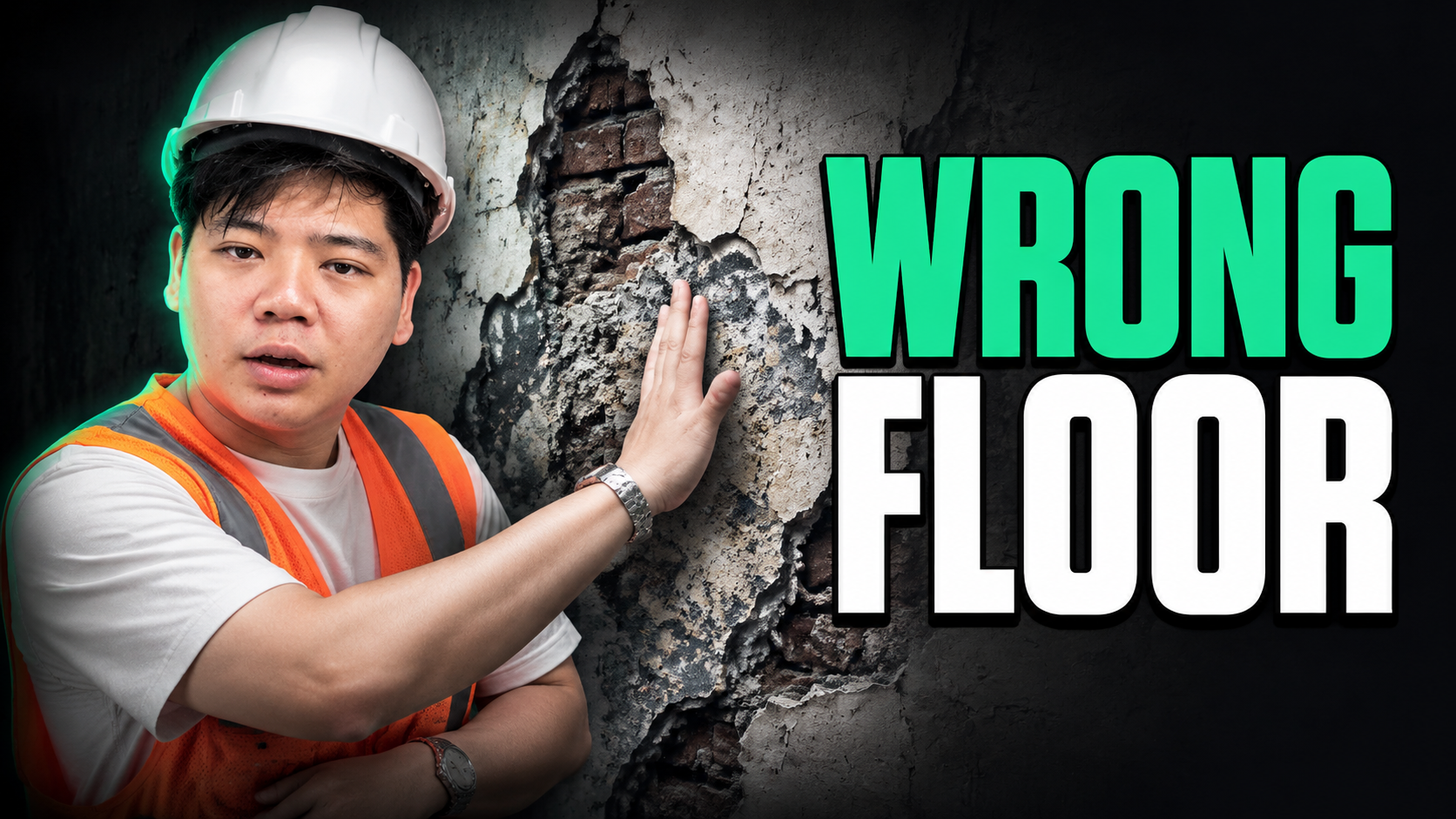
Here's why. The thing you're calling a conversion problem almost never lives where CRO looks. CRO looks at the page. The problem is sitting one or two floors above the page, and no amount of button-testing reaches up there.
Let me show you the floors.
The hierarchy nobody wants to be true
Picture everything that decides whether a stranger buys from you as a stack, top to bottom.
At the very top is the product. Does it solve a real problem for a real person, and do enough people want it? If the answer's no, nothing underneath matters. You can run the best ads on the internet and you'll lose money slightly more efficiently.
Below that is the offer. Not the product - the offer. The price, the bundle, the guarantee, the gift, the perceived value sitting in someone's head when they read it.
Below that is the funnel and the landing page. Is the journey from click to checkout smooth, or is there a hole in the bucket?
Below that is the angle - whether your message actually speaks to the problem this person has, or the problem you assume they have.
Then creative. The hook, the script, the format.
And right at the very bottom, the basement, is the account: campaign structure, bids, cost caps, all the media-buying knobs people love to twist.
Now here's the uncomfortable bit. CRO, the way it's usually sold to you - new button colours, moving the reviews up, a sticky add-to-cart bar - lives down in that basement next to the media buying. It's a 20 to 30% lever at the very most. The top four floors decide the other 70%. Twist a basement knob to fix a problem on the third floor and you're rearranging the furniture while the roof leaks.
I've watched an offer change take a brand's creative hit rate from roughly 1-in-5 ads working to nearly 1-in-2. No new ads. No new audience. No new button. Just a better thing on the other end of the click. That is the size of lever we're talking about, and it sits two floors above where CRO is digging.
Why a faster checkout can't save a thing nobody wants
There's a line I keep coming back to. You can't make people buy something they don't want by making it easier to buy. You can't butter the slide.
CRO, at its core, is the art of making the buy faster and smoother. That's genuinely useful - once people want the thing. If they don't, a frictionless checkout just gets them to "no" quicker.
The proof of this runs every Black Friday. When a brand has a properly good offer, people email in asking for it. The ad's running, the deal's clearly worth it, and they'll chase you down to give you money. Your site can be ugly. The buttons can be in daft places. Half the page can be broken. They'll still find a way to buy, because they want it that badly.
That's the tell. A great offer survives a bad website. A bad offer can't be rescued by a great one. So the work isn't "make the page convert better". The work is "make something people are willing to fight your website to buy".
The German Shepherd test
Here's the part that does most of the heavy lifting, and it's not on the page at all. It's the headline, and specifically how specific the headline is.
Say you sell dog food. You run an ad and a landing page that both say "dog food". Fine. Forgettable.
Now say you sell the exact same dog food, but the ad says "dog food for German Shepherds", the page says "dog food for German Shepherds", and there's a German Shepherd in the picture. Same product. Same price. Same everything in the bag.
The second one will out-convert the first by more than any button colour, headline font, or layout tweak you could ever test. It's not close. And you've changed nothing about the product - you've only changed who it's obviously for.
That's where the bulk of "conversion rate" actually comes from: the offer plus a headline specific enough that the right person reads it and thinks "oh, that's for me". Roughly 80% of it. The stuff CRO obsesses over is fighting for scraps of the remaining 20%, on pages you might not even keep.
The reason this beats months of A/B testing is simple. A split test on button colour is moving a 20% lever by a few percent of itself - a rounding error. Rewriting "dog food" to "dog food for German Shepherds" is reaching up two floors and pulling the 80% lever. One of those is worth your week. The other isn't.
Two rewrites that beat a quarter of testing
Let me make this concrete with the kind of thing we actually do, with invented numbers so nobody reads it as a guarantee.
A homewares brand was selling a "premium storage basket". Cold traffic to a clean product page, converting at maybe 1.4%, and they wanted us to CRO the page - heatmaps, the lot. We didn't touch the layout. We changed the message to "the basket that hides the toy explosion in your living room", put a chaotic-lounge-room photo behind it, and pointed the same ad at it. The page was no prettier. Conversion landed somewhere closer to 2.3% on that traffic. Months of layout testing wouldn't have found that, because the layout was never the problem - the basket was talking to nobody in particular.
Second one. A supplement brand running a tired "feel your best" angle, converting fine and going nowhere. The fix wasn't on the page either. It was the offer: they added a genuinely good free gift, something with real perceived value bundled with the first purchase. Same page, same ad style. Conversion rate moved up by something like a third, and suddenly enough ads cleared the bar that they could afford to make more of them. A button test was never going to produce that number, because the number lived in the offer, not the page.
Both times, the brand came in asking for CRO. Both times, the win was a floor or two up. That's the pattern, not the exception.
When CRO is finally the right call
I'm not anti-CRO. I'm anti-CRO-at-the-wrong-time. There's a point where it absolutely earns its keep.
It's roughly when you've already won upstairs. You've found an offer that genuinely works. You've found the messages and the headlines that convert, the ones you're confident you're keeping. You know who the buyer is and you're not guessing at the angle anymore. For most brands that's well into eight figures - call it past the A$30m mark, give or take - because by then you've usually been forced to solve the top floors just to get there.
At that stage, the basement is the only floor left with room in it. You've squeezed the offer, the headline, the angle. Now a 10% lift from a smarter checkout flow is real money, and it's worth a CRO team's full attention. The difference is you're optimising something you've already decided to keep, not polishing a page you might bin next month.
Spending real money optimising a page when you don't even know if you'll keep the offer is the actual waste. Sort out what you're selling and who you're selling it to first. Then, and only then, make the buying smoother.
Where to from here
So before you book a CRO project, do the cheap diagnostic in your own head. Walk the floors. Is the product something enough people want? Is the offer good enough that someone would email you for it? Is your headline specific enough that the right person knows instantly it's for them? If any of those is a "not really", that's your conversion problem, and no button colour is going to touch it.
If you can't tell which floor is leaking - and most founders genuinely can't from the inside, because they're standing in the building - that's the bit we can help with. A Signal/Noise Audit walks the offer, the message, and the unit economics before it ever looks at the page, and points you at the floor that's actually costing you the spend. So you fix what's leaking, not what's easiest to reach.
Which floor do you reckon yours is on?


Recent Insights®

.webp)

Powered by © Pigeon Digital 2026. All rights reserved.
We acknowledge the Traditional Owners of the land on which we work, the Wurundjeri Woi Wurrung Cultural Heritage Aboriginal Corporation people of the Kulin Nation, and pay our respects to Elders past and present. We recognise their continuing connection to Country, culture and community.
.svg)