Stop Running AliExpress Stock Photos: What 6-7 Figure Brands Should Actually Spend on Creative


A supplements brand came to us last year stuck at roughly $90k a month. Good product, healthy margins, a founder doing everything right on paper. Their problem was hiding in plain sight: every ad in the account used the same product render they'd pulled from their supplier's AliExpress listing. The exact same shot half their competitors were running.
They weren't losing because their ads were bad. They were losing because their ads were identical to everyone else's, and they'd never spent a cent making something only they could run.
Here's the thing about that. You can have the sharpest targeting, the cleanest account structure and the best offer in your category, and none of it matters if the creative looks like a stock photo. Meta decides who sees your ad largely off the creative now. The image or the video IS the targeting. And a borrowed render tells the algorithm, and the customer, that there's nothing here worth stopping for.
So let's talk about what brands actually spend to break out of that.
The benchmark nobody states out loud
When you listen to the operators running 8-figure accounts talk about creative cost, the number is lower than most founders expect. Not higher. Lower.
I've heard teams at that level describe spending well under 1% of total ad spend on sourcing creative. One 8-figure homewares brand I came across in a podcast was sitting at roughly half a percent in a given month, and the founder still called himself "underinvested". An accessories brand at similar scale told a near-identical story.
To put that in perspective: a brand spending ~$2m a month on Meta, paying out ~$10k to ~$15k that month for new creative. Half a percent.
Now here's the part that matters, because the raw percentage is misleading on its own. Those brands aren't cheap. They run full in-house studios, editors and creative strategists they treat as fixed overhead, not as a line item against ad spend. The half-a-percent is just the variable bit on top, the freelancers and UGC creators they pay per batch. The real investment is the team they've already built.
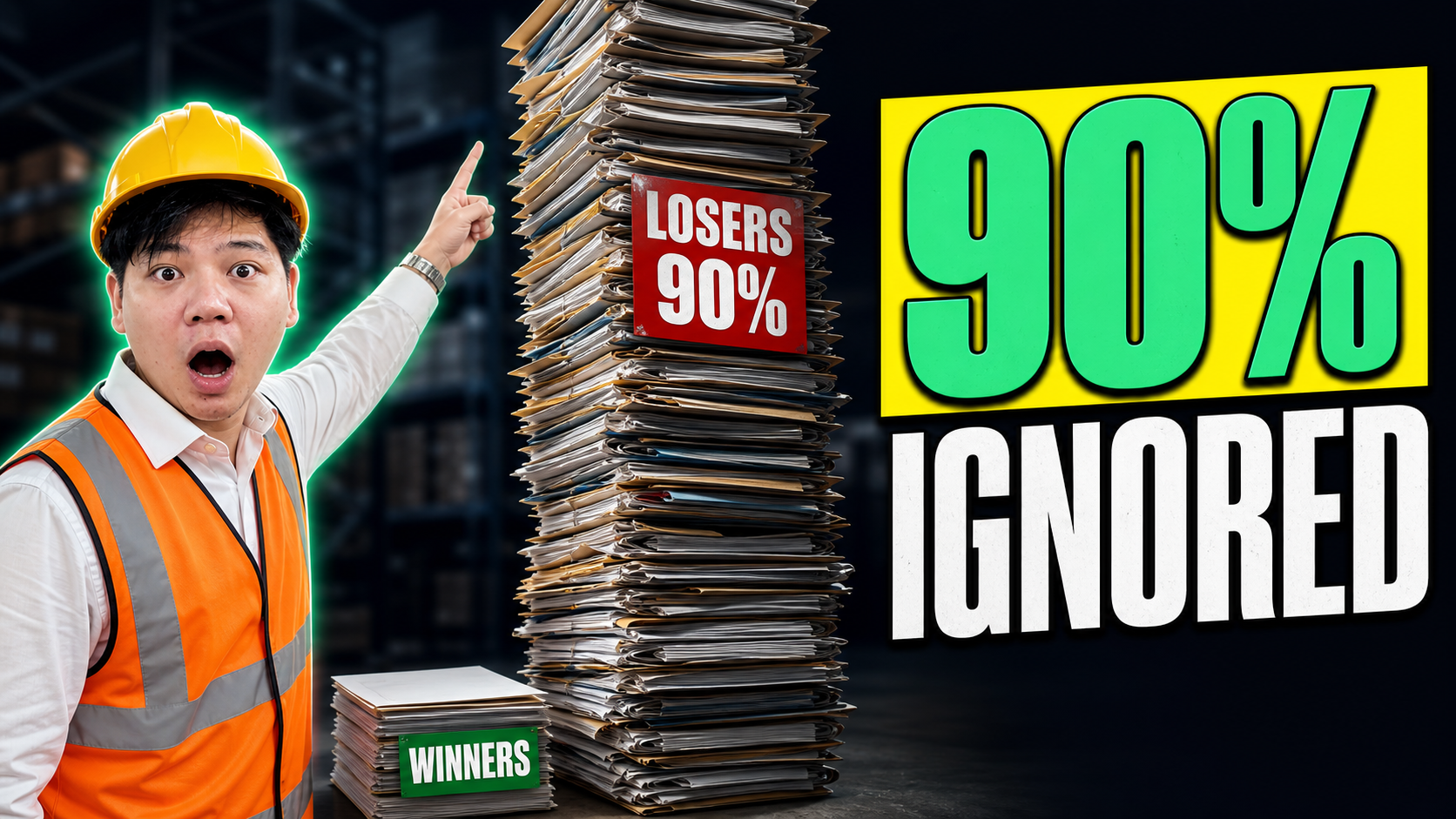
So when a 6-figure founder hears "8-figure brands spend under 1% on creative" and thinks "great, I'll spend $400 this month", they've drawn exactly the wrong lesson. The percentage is low because the volume is enormous. Half a percent of $2m is a serious creative operation. Half a percent of $40k is a single UGC video.
What this means for a 6-figure brand
If you're doing ~$40k to ~$80k a month in spend and trying to break into seven figures, percent-of-spend is the wrong way to set your creative budget. You're too small for the percentage to fund anything real.
At your size I'd flip it. Instead of a percentage, set a creative volume floor: the number of genuinely new concepts you need in market every month to keep finding winners. For most brands at this stage that's somewhere around 8 to 12 fresh concepts a month, not variations, actual new angles.
Work out what that costs you to produce properly and that's your number. In practice, for a brand at this size, that's usually a few thousand dollars a month minimum once you account for a couple of paid UGC creators, a small product shoot and the editing. Call it ~$3k to ~$5k a month as a realistic floor.
I know that feels steep when you're watching CAC. But run the other side of it. If you're spending ~$50k a month on Meta and weak creative is holding your blended ROAS at 1.8 instead of 2.4, that gap is roughly $30k of revenue you're leaving on the table every single month. A few thousand on creative to close it isn't a cost. It's the cheapest line in the whole account.
Proof is what you're actually paying for
There's a specific reason borrowed photos cap you, and it's worth naming because it tells you where to spend.
If your product makes a claim, the customer needs to see the claim be true. Nick Theriot has a phone case example I think about often. Imagine a brand selling "the world's toughest phone case". You can run a clean graphic with that headline next to the product, and it'll scrape a few sales. Or you can run a 12-second video of the case being dropped off a building and picked up uncracked.
Same claim. Same audience. One shows proof, one just asserts it. The proof version gets the likes, the comments, the shares, the lower frequency and the conversions, every time. It costs more to produce. That's the point. The cost is what buys the proof, and the proof is what scales.
So not every product needs a film crew. An aware, bottom-of-funnel audience that already knows you might convert off a simple product shot and a discount. But your cold, top-of-funnel audience, the people who've never heard of you, almost always need to be shown something, not told. That's where video earns its keep, and that's where the AliExpress render fails hardest.
Where I'd actually put the money
Here's my take on how a growing brand should split a real creative budget, roughly:
- A baseline of owned assets. Your own product photography and at least a handful of founder-quality videos that prove the core claim. This is the floor. If every ad in your account is a supplier render, fix this before anything else.
- The bulk into volume testing. Most of the budget should fund a steady stream of new UGC-style concepts, because you cannot predict your winners and the only way to find them is to test enough angles. Quantity, with intent behind each one.
- A deliberate overspend on outside talent, occasionally. This is the bit founders resist most, and it's the one I'd defend. Bringing in an outside creator or small agency at a premium, even paying 10-15% of the spend it touches, can be worth it, not because it's cheap, but because it gets you learnings and angles your in-house team would never have reached. Treat it like tuition. You're paying to find a winner and a fresh direction, not for a long-term arrangement.
One genuinely good way to find that outside talent cheaply: go looking for people already making "spec ads", the creators who film fake commercials for brands they don't even work for, just because they love the craft. Search a category and a brand on YouTube and you'll find them. They're often a fraction of agency pricing and twice as hungry.
The brands that scale past seven figures aren't the ones who found a way to spend nothing on creative. They're the ones who decided creative was the actual product they were buying with their ad budget, and funded it like they meant it.
If you're not sure whether your creative is what's capping you, or whether it's the offer, the structure or the unit economics underneath, that's genuinely hard to see from inside your own account. Pulling your full creative history into one view, next to what your competitors are running, usually makes the gap obvious within an hour. If you'd find that useful, our Signal/Noise Audit lays exactly that out, no strings attached.


Recent Insights®


.webp)

Powered by © Pigeon Digital 2026. All rights reserved.
We acknowledge the Traditional Owners of the land on which we work, the Wurundjeri Woi Wurrung Cultural Heritage Aboriginal Corporation people of the Kulin Nation, and pay our respects to Elders past and present. We recognise their continuing connection to Country, culture and community.
.svg)