Real CRO Isn't Button Colors: How Ad-Congruent Landing Pages Let You Spend More on Meta

Picture the click. Someone's on the couch at 9pm, half-watching telly, thumb moving. Your ad stops them. A woman holds up the exact dress, the hook lands, they tap. And the page that loads is your homepage. A carousel. A "shop new arrivals" banner. Three other products. Nothing that looks like the thing they just tapped on.
That half-second of "wait, where's the dress" is where most of your ad budget quietly dies.
I see this every single week. Founders pour money into creative, get the click, and then hand the visitor to a page that has no idea what ad they came from. Then they go looking for the problem in the wrong place. They book a CRO project. And the CRO project is about button colours.
Here's the thing - that's not CRO. Not the version that actually lets you spend more.
What CRO is not
Let me clear the decks first, because the word has been hijacked.
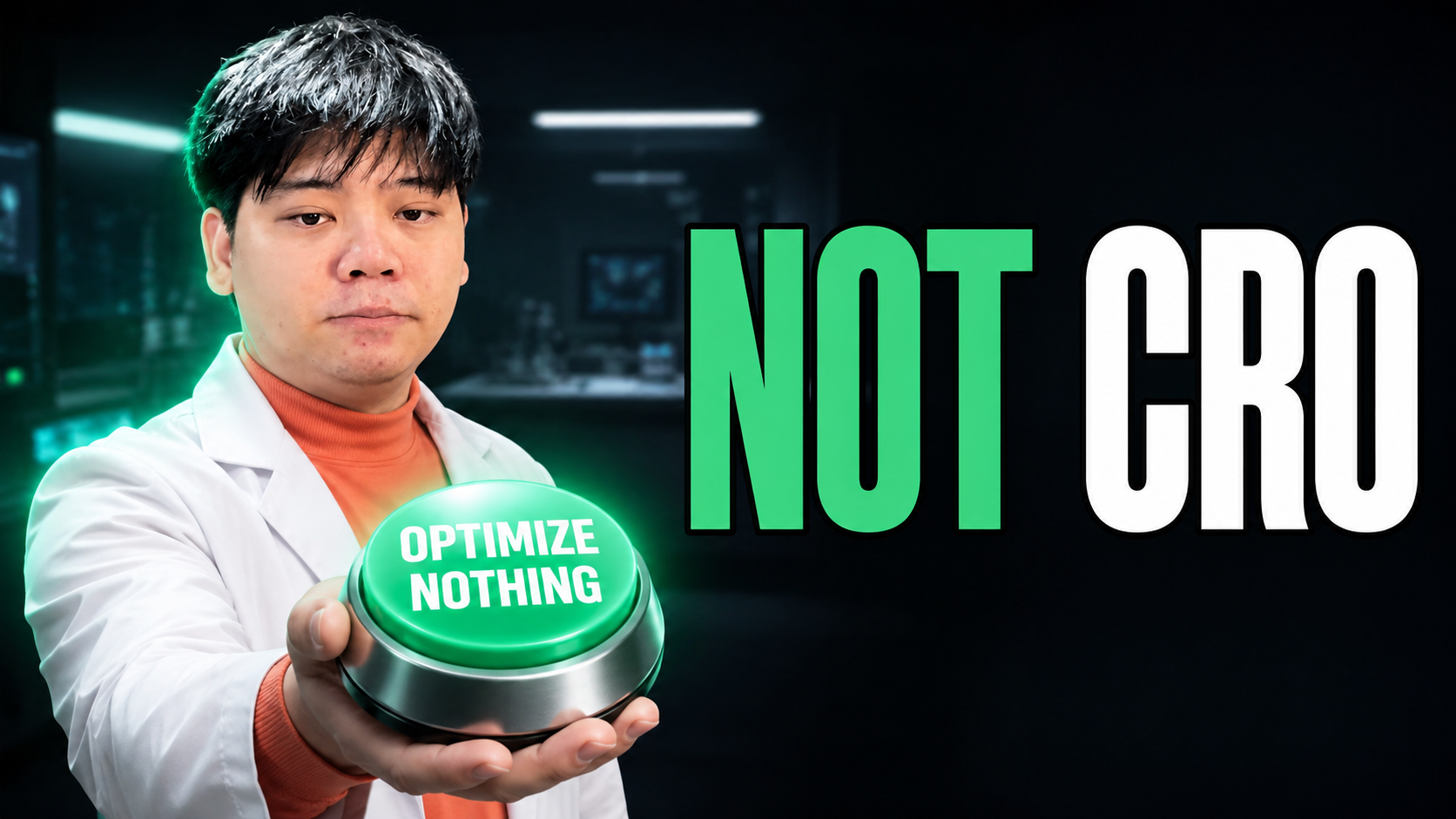
CRO is not nudging your Shopify store conversion rate by swapping a green button for a pink one. It's not moving the "add to cart" up 40 pixels. It's not the screenshots you see on Twitter, where someone claims they made you "$53k in recurring profit" from a split test.
Most of those split-test screenshots are statistically meaningless anyway. To trust a test result you need something like 500 to 1,000 orders per variant before the numbers settle. Flip a coin three times, get three heads, and you wouldn't bet your house on heads. Most CRO "wins" are exactly that - three heads.
Your store conversion rate is a black box. One day it's 1%, the next it's 2.5%, and you changed nothing. It's an average that wobbles. Chasing it directly is a fool's errand.
So here's my take on what CRO actually is: it's improving the customer journey so you can scale your ads harder. That's it. Same logic as ROAS - if your ROAS is high, you scale. If your customer journey converts, you scale. Everything else is decoration.
And the single biggest lever in that journey isn't design. It's whether the message in your ad matches the message on the page. Congruence.
The congruence chain
Think of a buyer moving through three rooms: the ad, the landing page, the product page. The job is to make each room feel like the same conversation.
Most brands break this on the very first step. The ad promises one thing, the page talks about another. I watched a teardown recently of apparel brands, and the most common instant fail was exactly this - a striking ad, then a click straight into a page that looked nothing like it. As the reviewer put it, the ad and the lander didn't align at all, and for clothing that's a hard no.
When it works, it feels like one unbroken conversation. You see the dress in the ad, shot somewhere that looks like the Amalfi coast, perceived value sitting at maybe A$300 in your head. You tap. The same dress loads instantly. And the price is A$59. Easy yes. The page didn't "convert" you with a clever button. It just kept the promise.
Here's a real example of how far this goes. A gut-health brand we'll keep anonymous had an ad running at around A$300 a day in spend. The hook called out stomach issues. The destination was a standard product page selling "delicious gourmet soups for a healthy lifestyle." Technically related. Emotionally miles apart.
We didn't touch the ad. We built a page that opened with "frustrated with doctors and digestive issues? I was too." A founder's letter about overcoming gut problems. Headlines about real food you can eat worry-free - high fibre, gluten-free, zero sugar, the exact things someone with stomach issues actually cares about. Reviews hand-picked so every single one mentioned digestion. Then the offer.
Same ad. Different page. That account went from roughly A$300 a day to around A$2,000 a day in spend, profitably. Nearly a 7x increase in what they could put behind the same creative.
The page, by the way, was ugly. Genuinely ugly. It just understood the customer better than a pretty page ever could.
Why this lets you spend more (the actual maths)
This is the bit founders miss, so let me put the numbers behind it.
Return on ad spend isn't one thing you push on. It breaks down roughly like this: ROAS = (conversion rate x average order value x click-through rate) / CPM.
Most people spend their entire life hammering the CTR term. Better creative, better creative, better creative. And creative matters, no argument. But it's one of four levers, and it's the one everyone else is also fighting over.
Congruent landing pages attack two of the other levers at once: conversion rate and AOV. Lift both, and ROAS doesn't tick up - it jumps. And when ROAS jumps, your spending ceiling lifts with it.
To put this into perspective: say you're running at a 2.0 blended ROAS and that's your break-even-plus-a-bit ceiling, so you're stuck at around A$1,000 a day. Lift conversion rate by 40% and nudge AOV up 15% with a properly built page, and the same ad is suddenly returning closer to 3.2. Now A$2,000 a day is comfortably profitable. You didn't find a new audience. You didn't fix the algorithm. You just stopped leaking the traffic you already paid for.
That's the whole game. CRO done this way isn't a cost-saving exercise. It's a spending-ceiling exercise. You're buying yourself permission to scale.
Build the page for the ad, not the other way round
If a landing page agency ever takes your money without asking to see your ads first, ask for a refund and walk. I mean that.
You cannot write a page until you know three things about the ad sending traffic to it:
- The angle. What promise or problem is the ad leading with? The page has to continue that exact thread, not a vaguely related one.
- The avatar. Who is this person? A page written for a 28-year-old with gut issues reads nothing like one written for a 55-year-old managing the same problem.
- The awareness level. Is this a cold, problem-aware buyer or someone ready to buy now? Send a problem-aware visitor to a hard direct-response page and they bounce. They needed an advertorial or a listicle to warm up first.
Get those three right and the page almost writes itself, because you're no longer guessing. You're finishing the conversation the ad started.
And build it fast. I've seen teams spend two weeks crafting a single landing page, and it makes me wince. You'd never spend two weeks on one ad. Use a builder you can move quickly in, get the page live, and let the market tell you if you were right. The opportunity cost of a slow build is enormous.
Test landing pages like you test ads
Here's the mindset shift I want you to walk away with: test your landing pages exactly the way you test creative.
Nobody builds one ad, watches it flop, and concludes "Facebook ads don't work." But people build one landing page, watch it flop, and conclude "landing pages don't work." Same flawed logic. The first page is a hypothesis, not a verdict.
The mechanics are simple. Duplicate the ad you already built the page for, drop the new URL in, and run it. We tend to spin up a separate testing campaign on 7-day click attribution only - we want real clicks driving real purchases, not view-through noise muddying the read.
Then watch two custom metrics against your control: conversion rate (purchases divided by landing page views) and AOV (conversion value divided by purchases). If the page beats the control, you don't wait a fortnight for significance the way you would with a pure split test. You're reading ad-level signal. A good ROAS or CPA over two to three days is enough to start scaling.
If it wins, scale it, then feed it into your champion ad set. If it loses, do exactly what you'd do with a losing ad. Work out why, build the next iteration, go again. Round and round. That loop is where the compounding lives, and almost nobody runs it on pages.
A quick gut check on your numbers
Want a fast read on where your store actually sits? Multiply your conversion rate by your AOV.
- Under 100: something's broken. Either your product isn't communicating its value or your traffic is poor. A 1% conversion rate on a A$50 AOV lands here, and it's a flag, not a death sentence.
- 100 to 250: your offer works but your pages are leaving money on the table. This is exactly where congruent landing pages pay for themselves fastest.
- 250 to 400: you're in good shape. Stop fiddling and pour fuel on the traffic.
- 400 plus: your page is doing its job. Go fix your CTR and your cost per click - make better ads.
One more: look at your add-to-cart-to-purchase ratio. Sitting at 5:1 or 6:1 means people are adding to cart and vanishing - a page-and-trust problem worth chasing. Around 3:1 is healthy. 2:1 is genuinely elite.
Where to from here
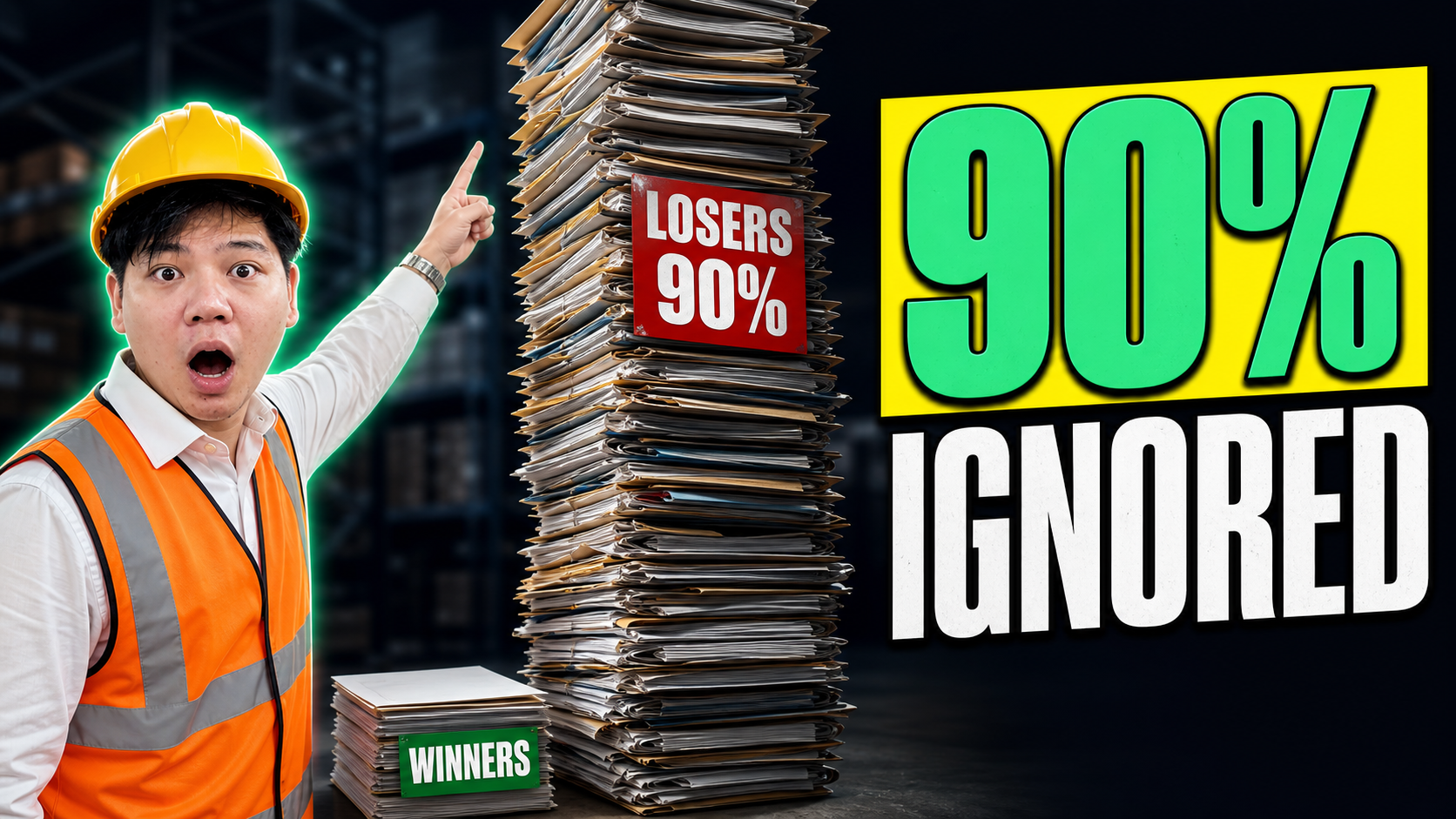
Most brands have a creative budget and no landing-page budget at all. They've optimised the click and abandoned everything that happens after it - which is where 90% of the actual buying decision gets made.
So the question I'd sit with is this: if you opened your top three ads right now and clicked each one as a stranger would, would the page that loads feel like the same conversation the ad started? Or would there be that half-second of "wait, where's the dress"?
If you're not sure, that's usually the answer. And if you'd like a fresh pair of eyes mapping exactly where your funnel loses people between the ad and the checkout, a Signal/Noise Audit walks your account, your creative, and your unit economics and shows you which gap is costing you the most spend you could be running. No pitch - just the leak, and what it's worth.


Recent Insights®

.webp)

Powered by © Pigeon Digital 2026. All rights reserved.
We acknowledge the Traditional Owners of the land on which we work, the Wurundjeri Woi Wurrung Cultural Heritage Aboriginal Corporation people of the Kulin Nation, and pay our respects to Elders past and present. We recognise their continuing connection to Country, culture and community.
.svg)