Founder Ads Outperform Creator Ads 2x: Build a Weekly Founder Content Engine (Even If You Hate Camera)

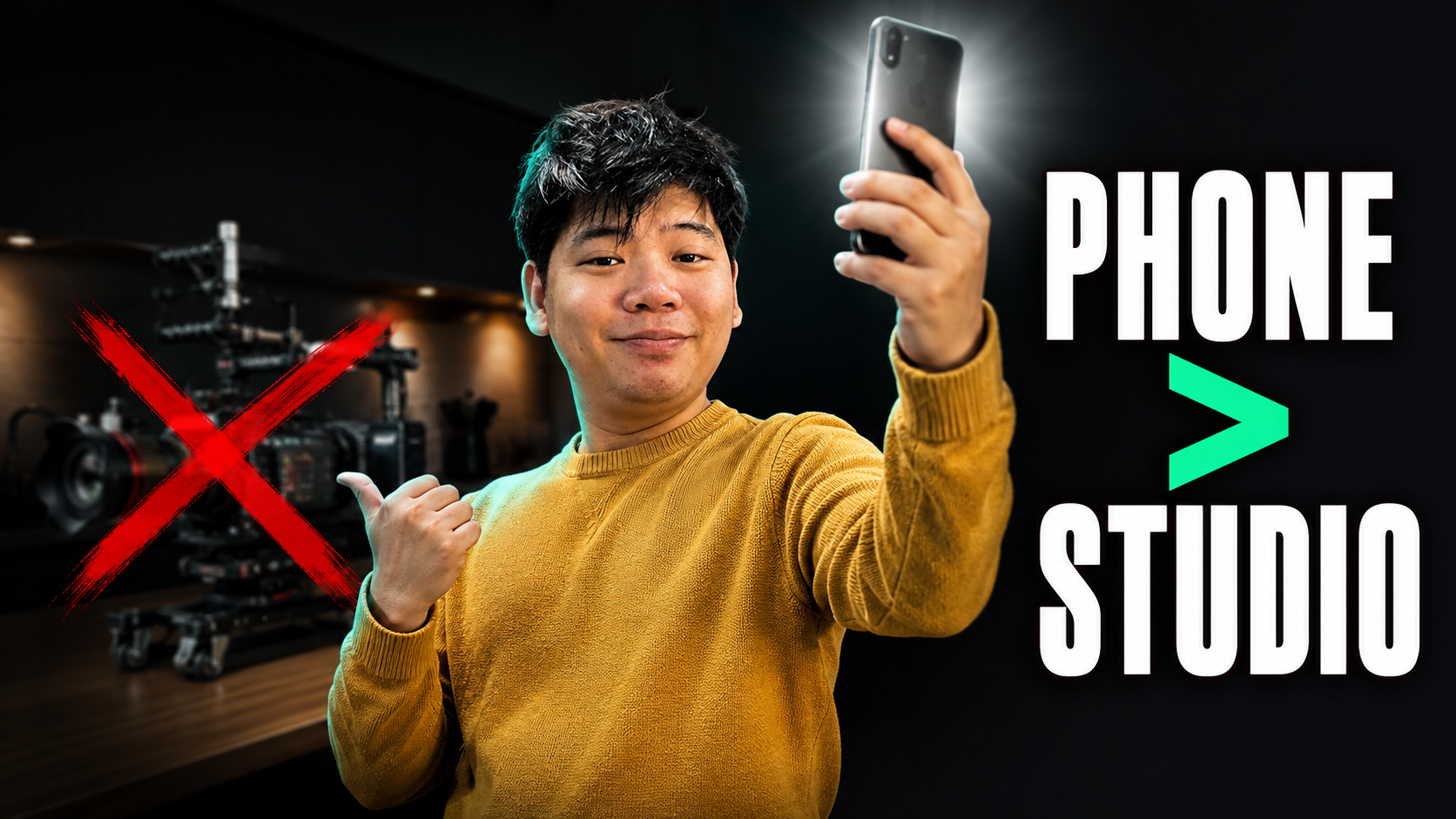
It's a Tuesday morning, kitchen bench, phone propped against a stack of cookbooks. No ring light. No crew. The founder is still in the jumper she wore on the school run, holding up the product and explaining, for the third take, why she actually made the thing. The first two were stiff. This one isn't. She forgets the camera's there for about forty seconds, says one honest line about the problem that drove her mad enough to build a business around it, and that's the take. Phone down. Coffee. Done by 10am.
That clip will go on to outspend a professionally produced creator ad for the same product. Roughly double the return, in my experience, off a fraction of the cost and effort.
I want to walk you through why that keeps happening, and then exactly how to build it into a weekly habit - including the version for founders who would rather do almost anything than appear on camera.
The data that made me stop arguing with this
I used to treat founder content as a nice-to-have. A bit of brand texture. Not a serious performance lever.
Then I started actually pulling the numbers on it, across a fair few Shopify accounts, and the pattern was hard to ignore.
Here's the thing that did it for me. On one homewares brand we looked at, we lined up the top ten best-performing ads of the last couple of years - organic and paid, every format, every creator they'd ever worked with. Around half of the top ten had the founder in them. That's after spending real money on polished creator content, studio shoots, the lot. The low-fi clip of the founder talking in her own kitchen kept beating the expensive stuff.
So we ran it properly into paid in the lead-up to peak season. The founder content was pulling something close to double the return on ad spend of a creator video for the same product. Not on day one and then fading either. We kept pushing spend into it and the ROAS sat stubbornly high, the kind of number where you stop questioning it and just keep feeding it budget.
I've now seen a version of this enough times that I treat it as a default rather than a fluke.
Why the founder beats the creator (it's not the production)
The instinct is to assume the polished one should win. Better lighting, better edit, a person who's comfortable on camera. In reality, that's often the problem, not the advantage.
A creator ad looks like an ad. The trained scroller clocks it in half a second and flicks past. A founder in their own kitchen, slightly awkward, talking about the exact frustration that made them build the product - that doesn't read as advertising. It reads as a person.
And there's a second thing underneath it, especially for brands with any aspiration baked into them. A chunk of your customers don't just want the product. They want a slice of the life the founder represents. When the founder's on screen, the customer's buying into a person they find a bit inspiring, not a paid stranger reading a script. You can't cast that. It only comes free with the actual founder.
The honest catch: the founder usually believes they're terrible on camera. Almost all of them do. It rarely matters. The slight awkwardness is doing half the work.
The 60-minute weekly shoot, start to finish
So here's the part I'd actually have you build. Not a one-off "let's film the founder" afternoon that never happens again. A weekly habit that's small enough to survive a busy week.
One hour. Same slot every week. The founder, a phone, and a short list of things to talk about. That's the whole production.
A version of the run sheet I'd hand a founder:
- Pick one product and one problem. Not the catalogue. One thing, one frustration it solves. The narrower the better.
- Shoot in a real place. Kitchen, car, the actual workshop where the thing gets made. A real room beats a clean studio for this format every time.
- Bang out five to eight short takes, not one perfect one. Different openers, same product. The goal is volume of raw material, not a masterpiece.
- Talk to one person. Not "hey guys". One customer you can picture. It changes the whole tone.
- Stop at the hour. The discipline is in keeping it short enough that the founder will actually do it again next week.
One hour a week feels like nothing. But run it for three months and you've got somewhere north of sixty raw clips to cut ads from, all in the one voice that's outperforming everything else in the account. That's the bit people miss. The power isn't any single shoot. It's that it compounds quietly while you're not thinking about it.
To put the trade in perspective: that's a lot more of the founder's time than a creator brief, but a fraction of the actual cost. More energy, far less money. For most brands that maths is the easiest yes in the whole media plan.
The scripts and hooks I'd hand them so they're not staring at a blank wall
The fastest way to kill this is to tell a founder "just be yourself on camera" and leave them to it. Nobody knows what to do with that. They freeze, the takes are stiff, and they quietly decide they're no good at it.
So don't hand them a blank page. Hand them openers.
The structure I lean on for founder takes is dead simple, and it's basically how every good founder ad I've seen is built underneath. Three beats: we set out to do this, but this annoying thing got in the way, so we had to do that. Intent, obstacle, resolution. It's just a story, told in thirty seconds, about why the product exists.
So the prompts I'd give a founder to start a take sound like this:
- "I started this because I was sick of..."
- "Everyone told me you couldn't make a [product] that actually [does the thing]. So I..."
- "The bit nobody tells you about [problem] is..."
- "I almost didn't launch this, because..."
- "If you've ever [specific frustration], this is the one for you."
Give them six or seven of those on a card and the whole thing changes. They're not performing anymore. They're answering a question, which every founder can do in their sleep about their own product.
And don't chase the perfect hook on the first take. If a founder can't think of five good openers, have them say thirty average ones into the phone. The right one is hiding in the ugly list. You film the volume, read which clips actually hold attention once they're live, then make more that look like the winners. That's the whole method - it's iteration, not inspiration.
For the founder who flatly refuses: the surrogate face
Now, some founders simply won't do it. Not "needs convincing" won't - actually won't. Camera-shy to their core, or just not the right kind of presence for it. I'm not going to pretend that founder doesn't exist, because plenty do.
You can still keep most of the lift. You just need a stand-in face of brand.
The idea is to find one consistent person who becomes the recognisable face instead of the founder. Not a rotating cast of creators - one human the audience starts to know. The closer they sit to the brand, the better it works:
- A real team member who's good on camera. The head of product, someone from the workshop, whoever's actually got something to say about the thing.
- One long-term creator you sign up as the ongoing face, not a one-off. The repetition is what makes them read as "part of the brand" rather than a paid ad.
- A genuine customer who already loves the product and happens to be watchable. Rarer, but gold when you find one.
The trick is consistency. A single familiar face, telling the same kind of honest stories the founder would have told, gets you a good chunk of the way to the real thing. It won't fully match a beloved founder on camera - nothing does - but it comfortably beats a stack of disconnected creator ads that all look like ads.
And worth saying plainly: the surrogate path is a real strategy, not a consolation prize. For a founder who'd be wooden and miserable on camera, a confident stand-in who actually enjoys it will outperform a reluctant founder every time.
How the pieces fit in the account
Quick note before you go and pour everything into founder content, because it's a trap I've watched brands fall into.
Founder content being your highest-return format doesn't mean it should be your only format. The clip explaining the product's technical features, the lifestyle shot, the customer review - they each do a job, and they lift each other up. Someone might stop on the founder telling the origin story, then convert a few ads later on the one that walks through how the thing actually works.
The mistake is seeing the founder ad at a 5x and a feature ad at a 3x and cutting the 3x. That feature ad might be the one quietly doing the convincing. Anything sitting at or above your target is usually earning its place, even if it's not the headline number.
So: founder content as the engine, the rest of your creative mix as the thing it pulls along. Not founder content as the entire account.
Where I'd start this week
If you do one thing off the back of this, block a single hour in the founder's calendar this week. One product, one problem, five to eight rough takes on a phone, stop at the hour. Then put one of those clips into the account next to whatever you're already running and watch how it does against your creator content over a fortnight.
I'd genuinely be surprised if it didn't earn its slot.
If you'd rather not guess at which founder angles are worth filming, a Signal/Noise Audit pulls apart your creative history and shows you which stories and formats your account is actually rewarding - so the founder's hour goes into the takes most likely to land, not the ones that just feel safe. Either way, the question worth sitting with is this: what's the one honest thing about why you started that you've never actually put in an ad?


Recent Insights®



.webp)

Powered by © Pigeon Digital 2026. All rights reserved.
We acknowledge the Traditional Owners of the land on which we work, the Wurundjeri Woi Wurrung Cultural Heritage Aboriginal Corporation people of the Kulin Nation, and pay our respects to Elders past and present. We recognise their continuing connection to Country, culture and community.
.svg)