What 'Full Accountability' Should Mean When You Hire a Meta Ads Agency

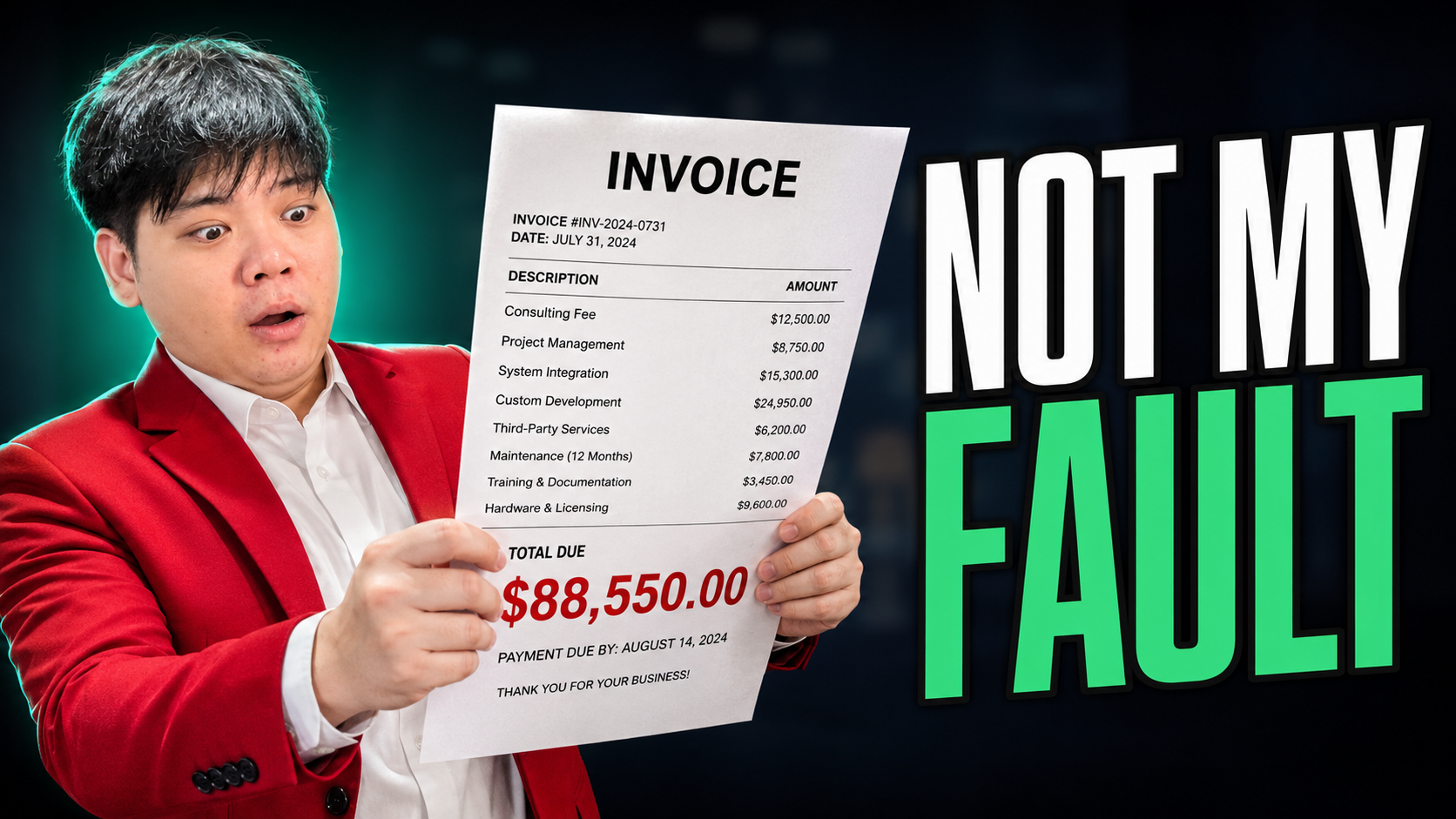
The screen-share is up, the slide says the month came in 30% under plan, and the agency lead clears their throat. Then come the words you've heard before. "So, a few things were outside our control. You ran low on stock mid-month, iOS shifted again, and the market was soft." Heads nod. Everyone moves on to next month's plan. Nobody says the obvious thing out loud, which is that you just paid a retainer to be told the miss wasn't really theirs.
I've sat on the other side of enough of those calls to know the script. And I've come to believe the single most useful thing a founder can do when reviewing a Meta ads agency has nothing to do with the dashboard. It's listening for how they talk about a miss.
Because the excuse is the tell. If your agency explains a bad month with "you ran out of stock" or "the algorithm changed," they've quietly told you something important: they never thought they were accountable in the first place.
The two sentences that give it away
Here's the thing about "it was outside our control." It sounds reasonable. Stock did run low. iOS did change. The market was soft. None of that is a lie.
But watch what the sentence actually does. The moment someone hands you a list of reasons the result wasn't their fault, they've told you they don't see themselves as the authority over that result. And if they're not the authority, you shouldn't be paying them as if they are.
I think about it the way a good operator thinks about taking responsibility for a number. The weak version is, "We had a contribution margin goal, but then you ran out of stock, and you sent inventory to retail, and you didn't launch the thing you said you'd launch." The strong version is, "Yep, we missed it. I should have seen the stock issue coming. That's on me. I'll be closer to your supply chain next time."
Same facts. Completely different person. One makes a case for why the miss doesn't count. The other takes the miss and tells you what changes because of it.
You want the second person running your ad account. The trouble is they both sound fine in the pitch. The difference only shows up when something goes wrong, which is exactly when it matters and exactly when most founders forgive it.
So set the standard before anything goes wrong
The fix isn't to find an agency that never misses. Everyone misses. Creative fatigues, a hero product sells out, a tracking change scrambles the data for a week. A team promising you a smooth line up and to the right is either lucky or lying.
The fix is to agree, up front, on what accountability actually looks like when the miss comes. I'd hold any agency, us included, to four things. If they can answer all four clearly, you've probably got a real partner. If they go vague on any of them, that's your warning.
1. There is a forecast, and it's theirs
You can't be accountable to a number nobody committed to. So the first question is simple: what are we forecasting this account to do, and who put their name on it?
Not a range so wide it can't be wrong. Not "it depends on a lot of factors." An actual number, for new-customer revenue or blended ROAS or whatever the agreed target is, that the agency owns and you both signed off on.
A forecast is a promise with a date on it. If your agency won't give you one, ask yourself why. Usually it's because a forecast is the thing you get measured against, and a team that's quietly planning to explain away misses doesn't want to be measured against anything firm. The willingness to commit to a number is the first signal you're dealing with someone who intends to be held to it.
2. One person owns it, by name
Big problems in an ad account are rarely one person's fault. Creative, media buying, the offer, the site, the email flows, the inventory, they all touch the result. Which is precisely why it's so easy for nobody to be accountable. When everyone's a little bit responsible, no one is.
The person worth paying the most is the one who'll put their hand up and say, "I'll take individual responsibility for this number. You can fire me if it doesn't work, and I want to be equally on the hook if it does." Not "the team is across it." A name.
So ask who that name is for your account. If the honest answer is "a pod of five people and a shared inbox," you don't have an owner, you have a committee, and committees are very good at producing reasons and very bad at producing accountability.
3. There's a written script for what happens when they miss
This is the one almost nobody asks for, and it's the most revealing. Ask them straight: walk me through exactly what you do the month we come in under plan.
A team that's been genuinely accountable before will have a real answer, because they've lived it. Something like: we tell you inside 48 hours, not at the end-of-month call. We bring a written read on what drove the miss and how much of it was the account versus the market. We come with two or three specific changes, not a shrug. And we say plainly which part was ours.
A team that's been hiding behind excuses will get uncomfortable here, because you're asking them to pre-commit to owning a miss before it happens. The discomfort is the information. How an agency behaves on a bad month tells you more about them than three good months ever will, so make them describe the bad month while you're still calm and they're still trying to win your business.
4. They share the result, not just the invoice
The deepest version of accountability is having actual skin in your outcome. An agency that only ever takes a flat retainer, no matter what the account does, has structured itself so that how you do and how they do aren't really linked.
I'm not saying every relationship needs a performance deal, and I'd be wary of anyone promising the moon on a pure-commission model. But I'd want to see some honest line between their reward and your result. Some way that a great quarter for you is a better quarter for them, and a bad one is felt on both sides of the table.
Because when the incentives genuinely point the same direction, the excuses tend to dry up on their own. Nobody explains away a number they're personally invested in hitting. They just go and fix it.
What this looks like from your seat
Put the four together and you've got a quiet test you can run on any agency, current or prospective, without a single screenshot.
Is there a forecast they own? Is there one name on the account? Do they have a clear script for the month it goes wrong? And is any part of their reward tied to your result?
If the answer to all four is yes, a down month becomes what it should be: a hard conversation, a clear read, and a plan. Not a slideshow of reasons it wasn't anyone's fault. If the answer to most of them is no, then the smooth months are borrowed time, because the first real stumble is when you'll find out there was never anyone holding the rope.
I'd rather a founder hold us to that standard than take our word for it. So if you're sitting with an agency relationship that feels fine on the good months but you've never actually seen how they handle a bad one, it might be worth getting a clear, outside read on the account itself, the forecast, the unit economics, where the real growth is hiding. Knowing the true picture is what lets you ask the four questions and actually judge the answers.
What would your current agency say if you asked them to describe, in writing, exactly what happens the month they miss?


Recent Insights®



.webp)

Powered by © Pigeon Digital 2026. All rights reserved.
We acknowledge the Traditional Owners of the land on which we work, the Wurundjeri Woi Wurrung Cultural Heritage Aboriginal Corporation people of the Kulin Nation, and pay our respects to Elders past and present. We recognise their continuing connection to Country, culture and community.
.svg)