
Photo Ad or Video Ad? The Only Question That Actually Decides It

If a mate tells you his car is quick, you nod and move on. If he tells you it'll do 0 to 100 in under four seconds, you want to see it. The claim is bigger, so the bar for proof goes up.
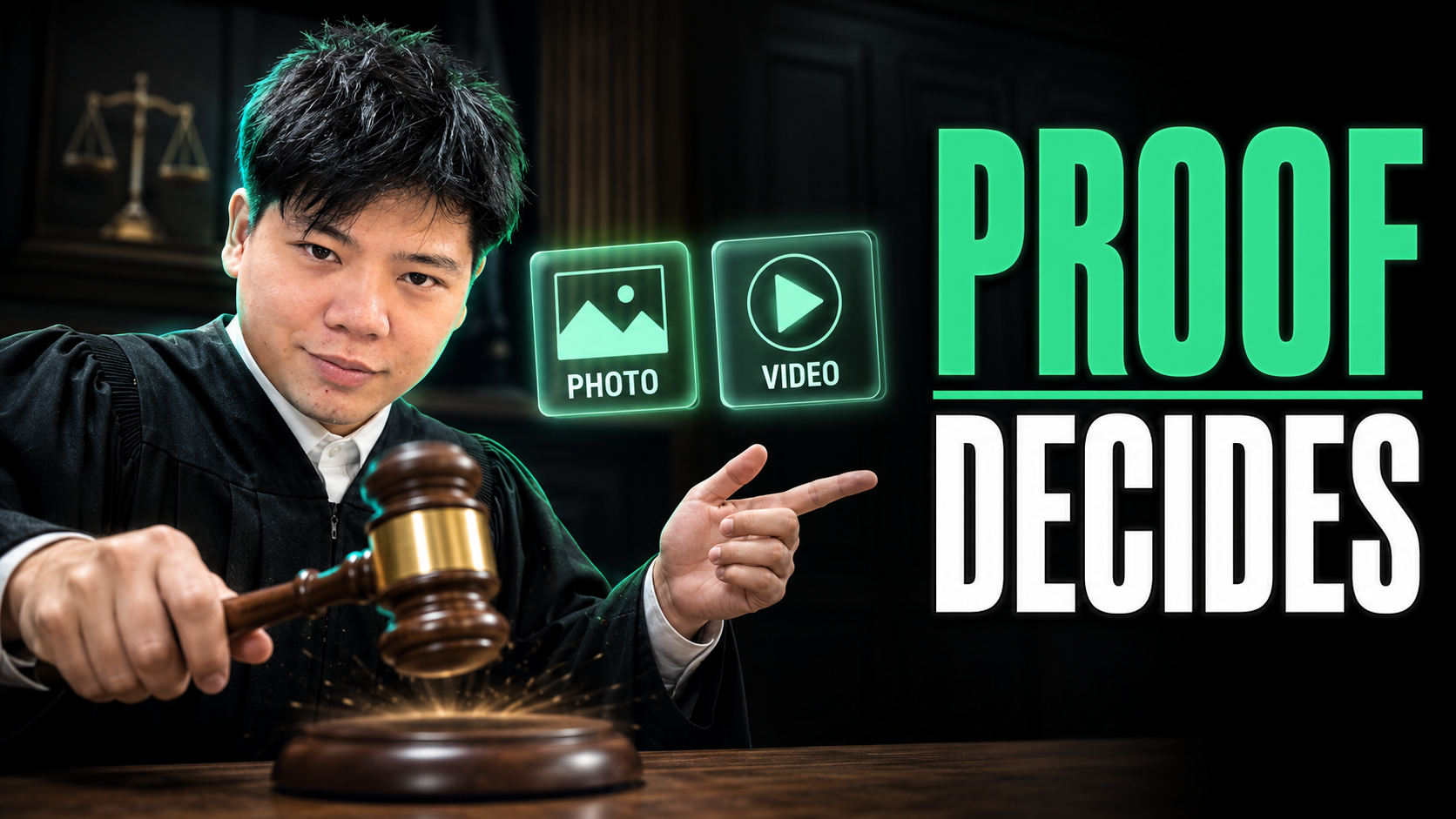
That's the whole photo-versus-video decision, really. People agonise over it like it's a production-budget question or a "what does the algorithm prefer" question. It isn't. It's a proof question.
So before you brief a single ad, the question I'd ask is: what do you actually need to show this person for them to believe you?
Get that right and the format mostly chooses itself.
Why "photo or video" is the wrong starting question
Most founders frame it backwards. They start with the format ("we should do more video") and then reverse-engineer a reason. Or they pick photo because it's cheaper and faster to ship, which is true, but cheap-and-fast is only a saving if the ad actually works.
Here's the thing. A static image is brilliant at stating a claim. It's terrible at proving one. Video is the opposite: slower and dearer to make, but it can show the thing happening in front of you.
So the real fork in the road is the size of the claim you're making. Small, easy-to-believe claim? A photo carries it fine. Big, "I'll believe it when I see it" claim? You need footage, or the ad just asserts something and hopes.
The proof test: say it out loud and listen for the doubt
Take your core selling line and say it as a sentence. Then listen for whether a stranger would instantly believe it or quietly think "prove it".
Say you sell a phone case and your angle is "the toughest case you can buy". That's a huge claim. A graphic with the product and the words "the toughest case you can buy" next to it is just you saying so. Why would anyone believe that over the ten other brands saying the exact same thing?
Now picture the other version. Same line, but the case gets dropped off a roof, hits concrete, and you pick it up with not a scratch on it. Fifteen seconds. Same claim, completely different outcome, because one shows proof and the other only asserts it.
That gap is the entire decision. Not every product needs proof. But the moment your claim is bold or your category is full of people making the same promise, an image that just states it will limp along: a few sales here and there, inconsistent, and usually a climbing frequency because not enough people are stopping for it.
Run the test on your own hero angle:
- "Drys in half the time" - needs proof. Show the before-and-after, the timer, the wet-to-dry. Video.
- "Available in twelve colours" - no proof needed. It's just true. A clean photo does it.
- "So comfy you'll forget you're wearing them" - needs proof, or at least a face reacting. Lean video.
- "Now 30% off this week" - no claim to prove, just an offer to state. Photo all day.
If the sentence makes a stranger sceptical, you're in video territory. If it's a plain fact they'd accept without a second thought, a photo is the cheaper, faster, perfectly good answer.
The bit nobody wants to hear about cheap footage
There's a version of this where someone sells a genuinely complex product, agrees it needs video, and then asks if they can just use the same stock clip everyone else pulled off a supplier site.
My honest take: you can, if you want the same results everyone else is getting and crying about. If your claim needs proof and you hand it footage that proves nothing, you've technically made a video and learned nothing.
The brands quietly scaling are the ones willing to spend a bit more to get the actual shot. The drop test costs more than a graphic. It also tends to return a lot more, because it's doing the one job the ad exists to do. I'm not saying torch your budget on a glossy production. I'm saying if proof is the point, pay for the proof.
Match the format to where the customer's head is at
Proof is the first filter. The second is how aware this person already is of you and their problem. Format choice shifts as they move along that path, and most accounts get this wrong by blasting one format at everyone.
Here's roughly how I'd map it. Treat it as a starting grid, not a law, because product and category bend it.
- Problem-unaware and problem-aware (top of funnel). These people don't know you and might not fully know they have the problem yet. You're doing the convincing from scratch, which means showing, demonstrating, telling a bit of a story. This is heavily video. A static rarely has enough room to move someone who started cold.
- Solution-aware (middle). They know the problem and they're weighing options, including yours against three competitors. Mixed bag here, call it roughly half and half. Proof still matters, so comparison-style video earns its place, but a strong static that nails the one differentiator can punch above its weight.
- Product-aware (warm). They've seen your stuff, watched the videos, they basically get it. Now a photo does plenty, because there's no claim left to prove, just a nudge to give.
- Most aware (your warmest). They're sold on you and waiting for a reason to pull the trigger. Don't over-produce this. A clean photo of the product with the discount is genuinely all it needs. Spending video money here is spending where it isn't required.
The pattern: the colder the audience, the more you're proving, so the more you lean video. The warmer they are, the less there is to prove, so the cheaper, faster photo does the job.
Two quick examples of getting it right
A homewares brand we were chatting with had a "folds flat in two seconds" angle running as a static. It plodded. The claim was the whole appeal and the image couldn't carry it. Swap to a five-second clip of the thing actually collapsing flat in someone's hands and the same message suddenly has teeth, because you've stopped asserting and started showing.
The other direction matters just as much. A skincare brand was pouring money into polished video for a retargeting audience that already knew the product cold. The job there wasn't to prove anything, it was to remind them there's 20% off until Sunday. A simple product photo with the offer would've done it for a fraction of the cost and the energy. They were paying video prices for a photo problem.
Both are the same mistake from opposite ends: format chosen by habit or budget instead of by what the audience actually needs to see.
Where to from here
So the next time you're stuck on photo or video, skip the format debate entirely. Say your main claim out loud. If a stranger would believe it on your word, a photo is your cheap, fast friend. If they'd think "show me", you need footage that does the showing. Then sanity-check it against how warm the audience is, because the colder they are, the more proving you've got to do.
If you've got a stack of ads underperforming and you can't tell whether it's the format, the claim, or the footage, that's the kind of thing a fresh pair of eyes spots fast. A Signal/Noise Audit walks your creative the way a cold customer would, and flags where you're asserting things you should be proving. No pitch, just a straight read on where your ads are talking past people.


Recent Insights®



.webp)

Powered by © Pigeon Digital 2026. All rights reserved.
We acknowledge the Traditional Owners of the land on which we work, the Wurundjeri Woi Wurrung Cultural Heritage Aboriginal Corporation people of the Kulin Nation, and pay our respects to Elders past and present. We recognise their continuing connection to Country, culture and community.
.svg)