VSLs Built Billion-Dollar Brands Before They Were Cool: How We Build Them for Meta

I'll admit something I was wrong about for a long time. For years I thought the 20-minute video sales letter was a dinosaur. A thing supplement hucksters did in 2014, all stock footage and a voiceover promising to melt your belly fat. I'd see one and quietly write it off as not for real brands.
Then I actually looked at the numbers behind a couple of the businesses running them, and I had to eat my words.
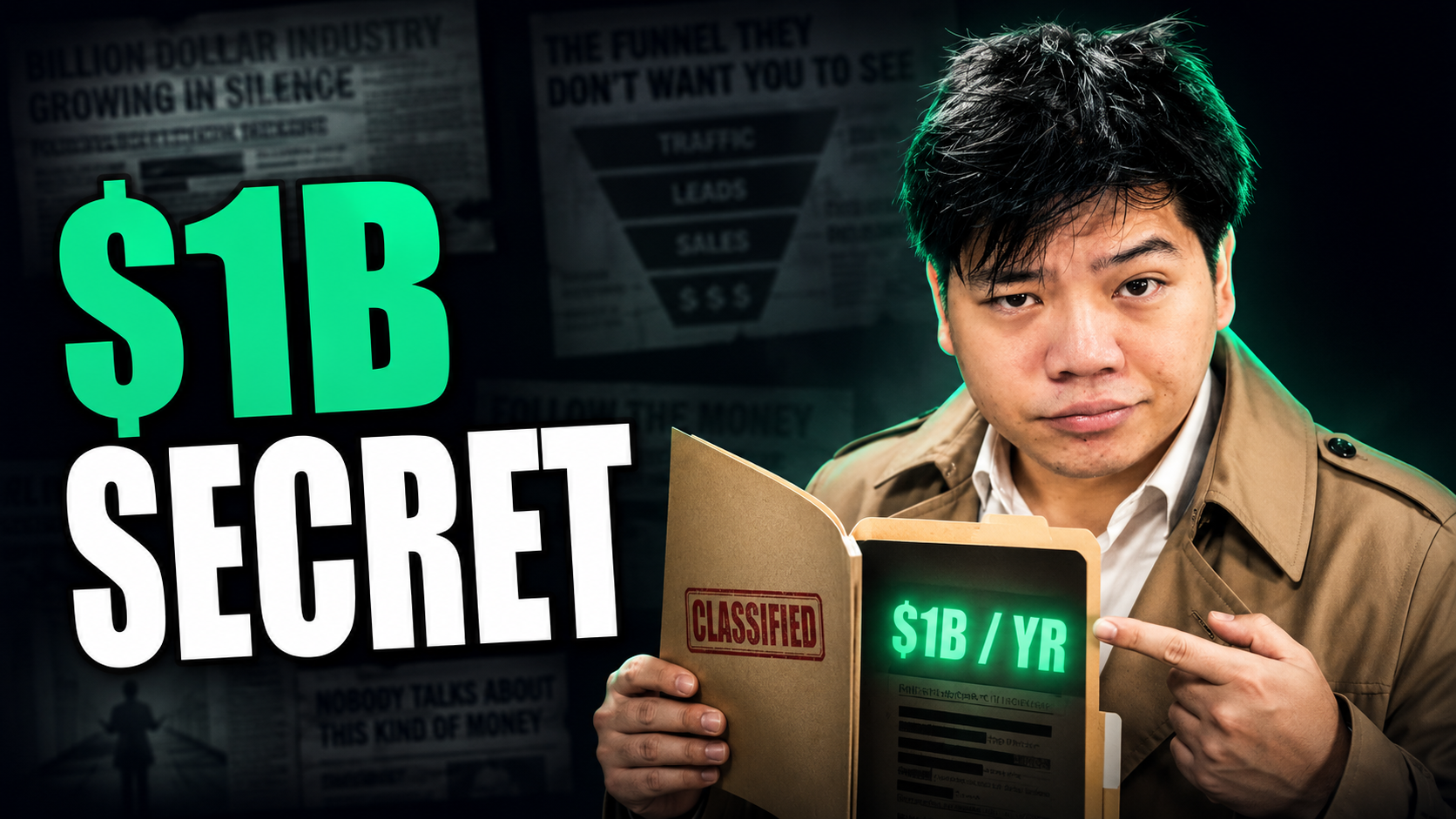
There's a brand most people in ecommerce have never heard of that does north of a billion dollars a year, and a huge slice of how they acquire customers is exactly this: long video sales landers that the rest of us decided were beneath us. They've been doing it the whole time. While the industry chased the next 6-second hook, they kept quietly running 25-minute videos and printing money.
So I want to walk you through what a VSL actually is, why it works, how I'd build a modern one for Meta, and the lines the old players crossed that you absolutely should not. This is a build guide, not a history lesson, but you can't build the thing well without knowing where it came from.
What a VSL actually is (and where it came from)
Let's clear up the term first, because it gets thrown around loosely.
A VSL is a video sales lander. Think of it as an advertorial in video form. Instead of sending cold traffic to a product page and hoping the page does the convincing, you send them to a page built around a single long video that walks them from "I don't know you" to "I'll buy" in one sitting.
Here's the thing that made it click for me. The whole format is just the affiliate playbook, aged up and cleaned up.
Go back eight or nine years. The affiliate media buyers - the ones spending fortunes on cheap early Facebook traffic - didn't run to product pages. They ran to advertorials. Long, story-led landing pages built around a customer avatar, designed to do the entire selling job before anyone saw a buy button. The avatar was the workhorse. It's the thing nearly every "advanced" landing page you admire today is descended from.
The VSL is the next step in that lineage. Same psychology, same structure, just delivered as a 20 to 30 minute video instead of a wall of text. And the pattern in our industry is brutally consistent: whatever the affiliates were doing eight years ago becomes "the new direct response tactic" the rest of us discover today. Landing pages, advertorials, now VSLs. We're always about eight years behind, dressing up their old homework as innovation.
That's not a knock. It's the reason I take the format seriously. It's been stress-tested against billions in spend by people whose own money was on the line.
Why it works when a product page doesn't
A product page asks the customer to do the selling themselves. It lays out the features, the photos, the reviews, the price, and trusts them to assemble all of that into a decision.
For a cheap, obvious, want-it-now product, that's fine. The page barely has to work.
But the moment the product needs explaining - a mechanism nobody understands, a benefit that sounds too good, a price that needs justifying - the product page falls over. The customer has questions, the page doesn't answer them in order, and they leave.
A VSL controls the order. That's the entire advantage. You decide what they learn first, what objection you handle second, when you introduce the price, when you ask for the sale. Nothing gets seen out of sequence. You're not hoping they scroll to the bit that matters - you're walking them through it.
That's why it tends to win for considered, mechanism-led, higher-consideration products and tends to be overkill for a A$25 impulse buy.
The anatomy of a modern VSL
Right, the build. When we script a VSL, it follows a spine that's barely changed in a decade, because it maps to how a person actually talks themselves into a purchase. Here's how I'd lay it out.
1. The hook and the callout. The first 15 seconds do one job: stop the right person and make the wrong person leave. You name the problem or the audience out loud. "If you're over 40 and your knees click going down stairs..." The clearer the callout, the better the whole video performs, because you've filtered the audience before you've spent a word selling.
2. The problem, agitated honestly. You spend real time on the frustration before you go near the product. Why it happens, why the usual fixes don't work, why it's not their fault. This is where most brand-side attempts fail - they rush to the product because they're proud of it. The customer doesn't care about your product yet. They care that you understand their problem.
3. The mechanism. This is the heart of a good VSL and the bit a product page can't do. You explain the why behind the product. The actual reason it works, in plain language, ideally something the customer hasn't heard framed this way before. "The reason most magnesium does nothing is the form - your gut can't absorb it." Get the mechanism right and the sale almost makes itself, because now they understand something new and your product is the obvious conclusion.
4. The product as the answer. Only now do you introduce what you're selling, and you introduce it as the natural solution to the mechanism you just explained. By this point it should feel less like a pitch and more like the missing piece clicking in.
5. Proof. Reviews, results, the founder's story, the credential, the demonstration. Whatever you've genuinely got. This handles the "yeah but does it actually work" voice in their head.
6. The offer and the close. Price, what's included, the guarantee, and a clear reason to act now that isn't a fake countdown timer. You ask for the sale plainly. You've earned it by now.
A couple of build notes that matter more than people think.
Length follows the product, not a rule. I've seen a sharp 8-minute VSL out-convert a bloated 30-minute one for a simple product, and I've seen a 25-minute one needed because the mechanism genuinely took that long to explain. Don't pad to hit a number, and don't cut the mechanism short to save time.
And the page around the video earns its keep. Captions on by default, because a big share watch on mute. A buy button that appears at the right moment rather than sitting there from second one. A text version below for the skimmers who won't watch but will read. The video is the engine, but the lander is the car.
When a VSL beats a standard PDP drop
I don't run a VSL for every product. Most of the time the standard play - good creative driving to a strong product page - is the right call, and it's far less work to produce. So here's roughly how I decide.
I lean towards a VSL when most of these are true:
- The product needs explaining. There's a mechanism, a "why this works" that isn't obvious from a photo and a headline.
- It's a considered purchase. Higher price, or a category where people research before they buy, or a claim that sounds too good and needs earning.
- The margin and AOV can carry it. A VSL is expensive to make and the traffic to it is cooler. You need the unit economics to absorb a longer, more deliberate sales process. A A$40 order with thin margin usually can't.
- You've got a real story or mechanism to tell. If the honest answer to "why does this work" is "it's just a nice version of a normal thing", you don't have a VSL. You have a product page.
I'd stick with the standard PDP drop when the product is cheap, impulsive, visually self-explanatory, or when you simply don't yet have the volume to justify the production. A homewares brand selling a A$30 candle does not need a 20-minute film about the candle. Run the nice creative, send it to a clean page, move on.
One more honest point. A VSL is a bigger bet. More to script, more to shoot, more that can go wrong. When it works it's a genuine acquisition engine that competitors can't easily copy. When it misses, you've sunk real production money into a swing. Treat your first one as a test with a real budget behind it, not a guaranteed win.
The lines the affiliates crossed (do not follow them here)
Now for the part I care about most, because this format has a dark history and you need to know exactly where the fence is.
The early affiliate world that invented this stuff was, to put it bluntly, often fraudulent. The playbook back then was to invent a pill, claim it cured hair loss or whatever else, slap "backed by Oprah" or "as seen with Dr Phil" on it with no basis whatsoever, run enormous scale, and then burn the brand down and start a new one every couple of months when the heat came. There were essentially no rules, and a staggering amount of money got made saying things that were flatly untrue.
That approach built some real fortunes, and some of those fortunes quietly funded brands you'd recognise today. But it also got people sued, shut down, and worse. The format is powerful precisely because it's so persuasive, which is exactly why the rules around it are not optional.
So here's the fence, plainly:
- No invented endorsements. You do not put a celebrity, a doctor, or a publication's name on it unless that endorsement is real and you can prove it. "As seen on" something you were never on is the fastest way to get torn down.
- No claims you can't back. Especially anything health, weight, income, or outcome related. If you can't substantiate it, it doesn't go in the script. The whole power of the mechanism section is that it's true - a fabricated one is both illegal and, eventually, obvious.
- No fake scarcity or fake testimonials. The countdown timer that resets, the made-up "Sarah from Perth", the before-and-after that isn't real. All of it crosses the line.
- Disclose the ad. It's still an advertisement. Treat it like one.
The reason I'm blunt about this isn't just risk, though the risk is real - heavy compliance is genuinely part of why this channel is hard. It's that the honest version of a VSL outperforms the dishonest one over any real time horizon. A true mechanism, real proof, an offer that delivers - that's a brand you can run for years and scale with confidence. The fraudulent version is a brand you have to keep burning down and rebuilding. One of those is a business. The other is a sprint towards a wall.
You can have everything that made the format work - the structure, the psychology, the control over the sequence - without a single thing that gets you in trouble. The format was never the problem. The lies were.
Where I'd start
If you've got a product that needs explaining and the economics to carry it, I'd script one VSL before I'd shoot ten more 6-second hooks. Map the six beats above to your actual product, be ruthlessly honest in the mechanism section, and treat the first one as a funded test rather than a sure thing.
If you want a clearer read on whether your range is even a fit for this - which products have a real mechanism worth a long video and which are better left on a clean product page - that's a fair chunk of what we pull apart in a Signal/Noise Audit. We look at your unit economics, your creative history, and what your competitors are running, and the VSL question usually answers itself once it's all laid out next to each other.
Either way, the question I'd sit with is this: what's the one thing about why your product works that you've never actually had the room to explain properly? That's your VSL.


Recent Insights®



.webp)

Powered by © Pigeon Digital 2026. All rights reserved.
We acknowledge the Traditional Owners of the land on which we work, the Wurundjeri Woi Wurrung Cultural Heritage Aboriginal Corporation people of the Kulin Nation, and pay our respects to Elders past and present. We recognise their continuing connection to Country, culture and community.
.svg)