
If You Spend Under $50k/Month on Meta, You Probably Don't Need an Agency Yet

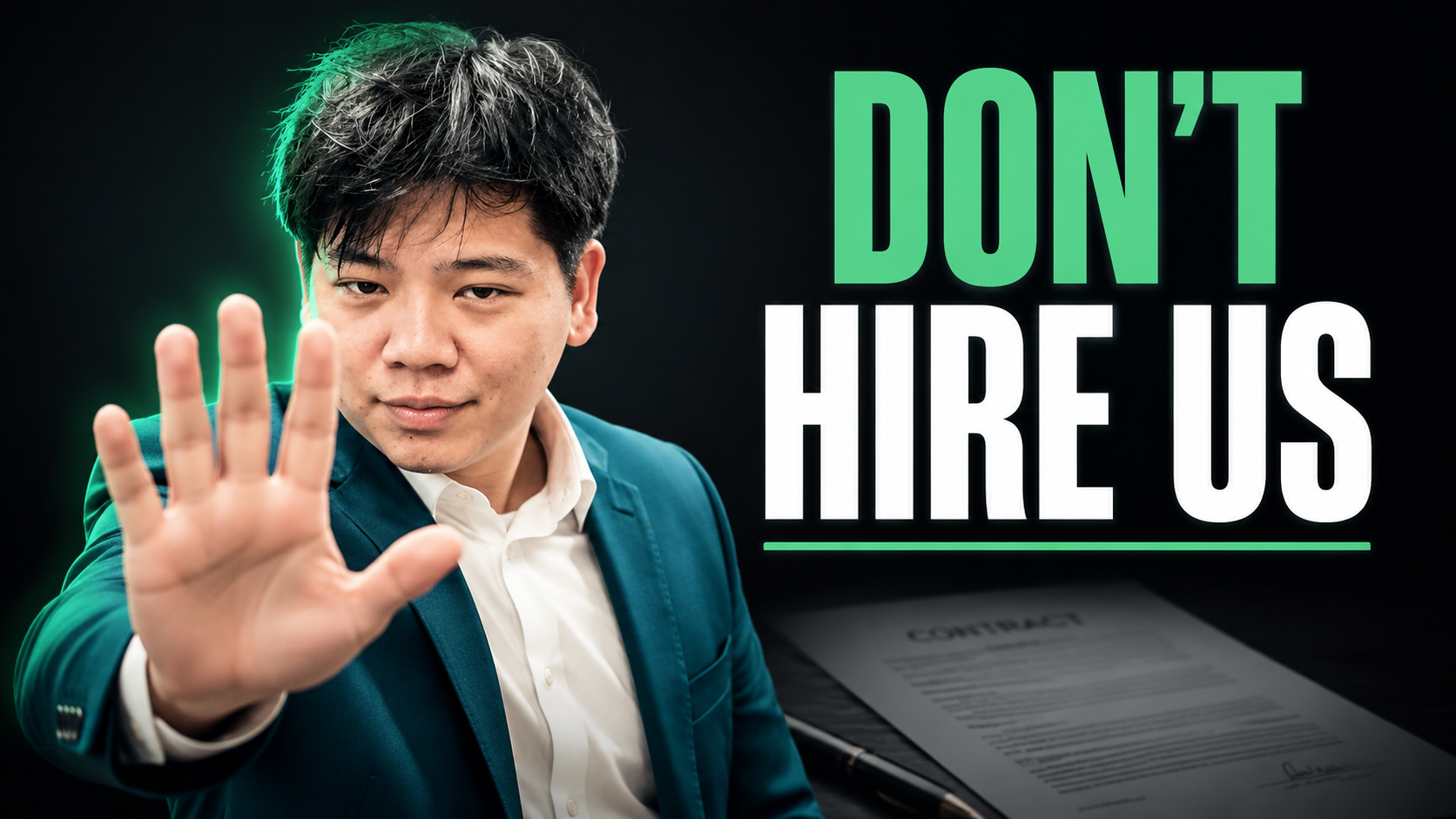
A founder I spoke with recently was running a homewares brand doing roughly A$40k a month on Meta, declining ROAS, and she was about to sign a A$3k/month retainer with an agency to fix it. On paper that looked sensible. In reality it was the worst move available to her, and I told her so even though our agency does exactly that kind of work.
This is the part of the business most agencies won't say out loud, so I'll say it. Below a certain spend, hiring an agency almost guarantees you mediocre service, and you'll learn more, faster, running the ads yourself.
I want to put a number on it, explain why the maths works the way it does, and then tell you the actual signal that it's time to bring someone in. Because there is a right moment. It's just later than most founders think.
The number I'd give you: roughly $50k a month
Here's my take, and it's the same one I'd give a mate over coffee. If you're spending less than about A$50k a month on Meta, in most cases you should be managing that spend yourself. And by yourself, early on, I mean you. The founder.
There are exceptions, and they matter. If you've got a big retail business or a wholesale arm throwing off real revenue, and Meta is a small slice of a much larger machine, then your time is genuinely worth more elsewhere and it's fine to hand the ads off sooner. Picture a brand doing A$30 million a year where only a few million of that is online. They can afford to go get a media buyer and not blink. That's not most of the people reading this.
For most 6 and 7 figure DTC brands sitting under that A$50k line, the spend just isn't big enough yet to support a good agency relationship and your business at the same time. That's not a knock on you. It's arithmetic.
Why the retainer maths quietly breaks
Good work takes time, and time costs money. That's the whole thing, and everything else follows from it.
Say an agency is doing your media buying and your creative properly. To actually do that well, they need to be paid something in the region of A$10k a month. That covers a strategist who knows your account, an editor cutting new creative, someone briefing and testing, and the hours to look at the numbers and react. Real work, real people, real time.
Now run that against your spend. If you're at A$40k a month and paying A$10k for the service, you're handing 25% of your media budget to the agency before a single ad runs. The maths gets ugly fast. To make that fee worth it, the agency has to lift your performance by a quarter just to put you back where you started, and that's a big ask in any account.
So what usually happens instead is you find an agency that'll take you on for A$2k or A$3k a month, because that's the number your spend can absorb. And here's the uncomfortable bit. If you're paying an agency three or four grand a month and expecting more than basic, hands-off media buying, there's almost no way they're giving you good work. They can't. At that fee, nobody is spending real hours on your account. You've bought a login and a monthly report, not a team.
I'd rather tell you that than take the retainer and let you find out the slow way.
The thing you actually lose by outsourcing too early
The retainer maths is the obvious problem. The sneaky one is what you give up.
When you run the ads yourself in those early days, you learn how Meta spend actually behaves. You watch what happens when you push budget too hard. You feel the difference a new hook makes. You develop a point of view about what good looks like, and that point of view is worth more than almost anything else you can build at this stage.
Because here's what happens to founders who skip that step. They never form a view, so they can't tell a good agency from a bad one. And then they get stuck on what I'd call the agency carousel. Hire an agency, six months of disappointment, fire them, hire the next one promising the same thing, repeat. I've watched founders burn two years and a frightening amount of cash going round that loop, and the root cause every time is that they outsourced before they understood the channel well enough to judge the work.
Running your own ads to A$50k a month is the cheapest education in performance marketing you'll ever get. You're already paying for the media. The learning comes free on top.
What changes once you're past the line
I'm not anti-agency. Obviously. The point is that the in-house versus agency debate is mostly the wrong frame. The real question is simpler: are the smartest people doing the smartest things for your business, at a price your business can carry?
Once you're spending past that A$50k mark, the calculus genuinely shifts. The spend can now support proper work, your time is better spent on product and brand and the parts only you can do, and the hours an agency or a senior hire puts in start paying for themselves.
When you get there, the thing I'd hunt for isn't "in-house" or "agency" as a category. It's point of view. Whoever you bring in, internal or external, the question is whether they actually have a considered, defensible take on what great media buying and creative look like in your category. Cost is the most overrated factor in this decision. Plenty of founders assume in-house is automatically cheaper and gets more hours on the account, and that's just not reliably true once you cost in salary, tools, management and the gaps when someone leaves.
So the order I'd suggest is this. Run it yourself to roughly A$50k a month and build your own view. Then hire for point of view, not for a job title or the lowest invoice.
The real signal it's time
People wait for the wrong trigger. They think the signal is "I'm too busy" or "I hate doing this." Those are real feelings, but they're not the signal.
The signal is when you've genuinely hit the ceiling of what you can do yourself, your spend is comfortably north of A$50k a month, and you can clearly articulate what you'd want a partner to be better at than you are. When you can say "I need someone sharper than me at creative testing and media-buying velocity, and I can describe exactly what good looks like there," you're ready. You'll hire well, because you'll know what you're buying.
If you can't finish that sentence yet, you're not behind. You're just early, and early is fine. Early is where you build the judgement that makes the later hire pay off.
There's an old line that fits here: it's remarkable how well not losing money works if your goal is to make money. The same is true of this decision. The slow, unglamorous path of running your own ads first is the one that protects you from the most expensive mistake, which is paying a stranger to do something you can't yet evaluate.
So before you sign anything, sit with one honest question. If you handed your account to an agency tomorrow, would you actually be able to tell whether they were doing a good job, or would you just be hoping? If it's hoping, that's your answer for now. And if you'd like a calmer read on where your account really sits before you decide either way, a Signal/Noise Audit will lay your numbers and your creative out plainly, so the hire-or-hold call gets a lot easier to make.


Recent Insights®



.webp)

Powered by © Pigeon Digital 2026. All rights reserved.
We acknowledge the Traditional Owners of the land on which we work, the Wurundjeri Woi Wurrung Cultural Heritage Aboriginal Corporation people of the Kulin Nation, and pay our respects to Elders past and present. We recognise their continuing connection to Country, culture and community.
.svg)